
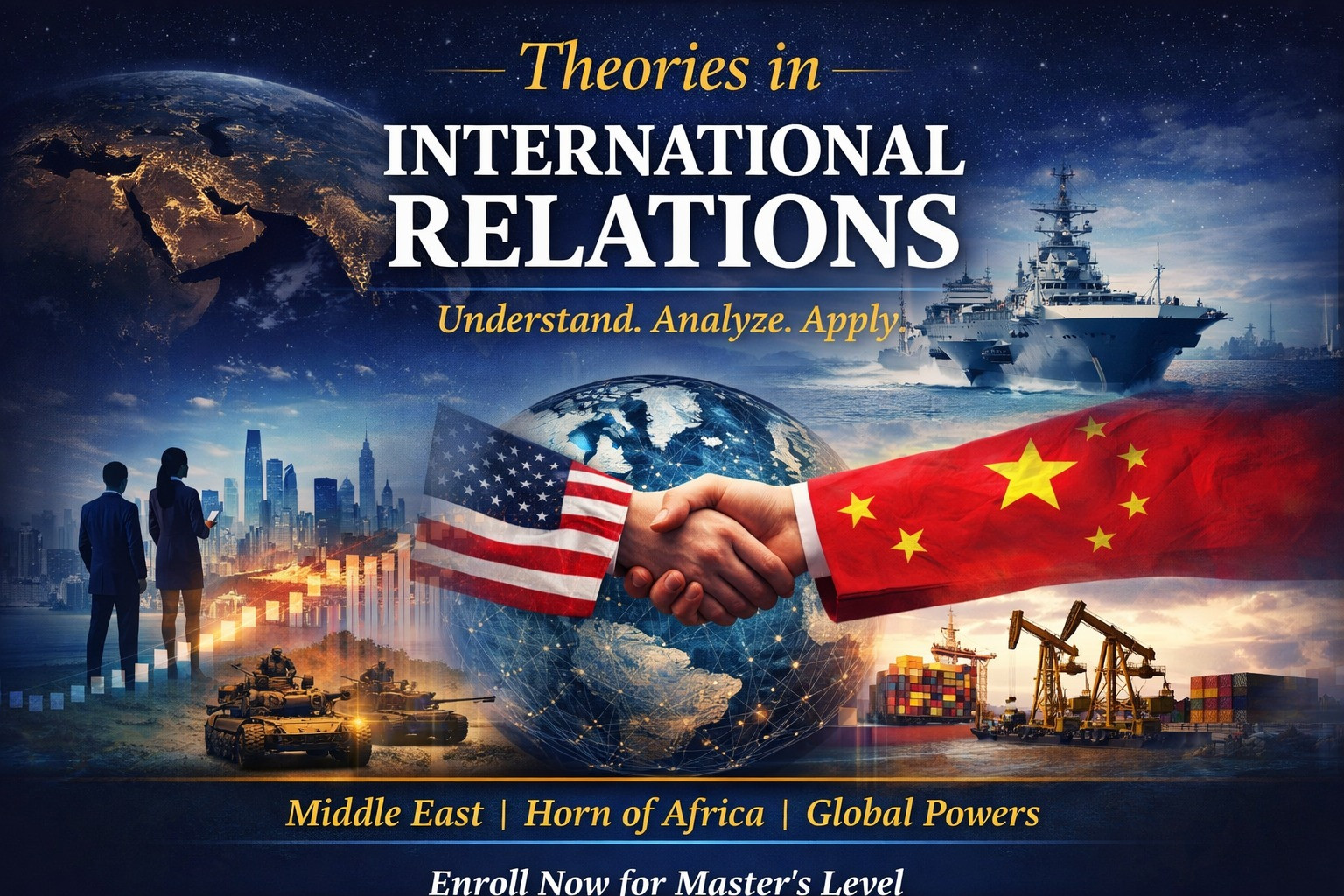
Theories in International Relations
Theories in International Relations trains students to use theory as a practical tool for interpreting world politics rather than as abstract classroom knowledge. The course examines realism, liberalism, constructivism, Marxist and other critical approaches, foreign-policy analysis, and competing understandings of international security and cooperation. Students compare the core assumptions, analytical strengths, and practical limitations of each theoretical perspective, then apply them directly to real cases involving conflict, cooperation, international institutions, identity politics, global inequality, and international law. Examples drawn from global politics, Africa, the Middle East, and the Horn of Africa encourage genuinely contextual, evidence-based analysis rather than abstract theorizing detached from events. Through readings, quizzes, structured debate, case work, and oral assessment, learners develop the ability to select appropriate theoretical frameworks for a given problem, compare rival explanations fairly, support claims with concrete evidence, and produce clear, critically informed written and spoken arguments about contemporary world politics today.