
NEXA INSIGHT
DAILY BRIEFING
HORN OF AFRICA · MIDDLE EAST · THE GREAT POWERS
Daily Briefing: The Houthis Close Their Grip on Bab el-Mandeb as a Ship Is Struck in Hormuz
Nexa Insight · Regional Analysis · Daily Briefing
Verified developments, 12–14 September 2026 | What happened, not what it means — the analysis is in the Weekly Update.
I · Horn of Africa
Horn of Africa today
The UN Security Council extended Sudan’s Darfur arms embargo by only one month after Russia blocked a wider ban, and Eritrea’s Foreign Ministry accused Ethiopia of destabilising the region and arming the RSF. Ethiopia has not substantively responded.
1. Sudan / the arms embargo. The Security Council voted 15-0 on 11 September to adopt Resolution 2828, extending the existing Darfur-only arms embargo and the Panel of Experts’ mandate by one month rather than the nationwide embargo Washington wanted. US Deputy Ambassador Jeffrey Bartos called the 20-year-old, Darfur-only regime “insufficient”; Russia’s Deputy Ambassador Anna Evstigneeva said Moscow “will not allow even a hint of broadening the restrictions.” The short rollover sets up another Council fight around mid-October. — UN Press (SC/16450); Sudan Tribune; Arab News, 11 September.
2. Ethiopia / Eritrea. Eritrea’s Foreign Ministry said on 12 September that Ethiopia’s ruling party has spent “more than three years” escalating hostile rhetoric, financing armed groups seeking regime change in Asmara, and backing Sudan’s Rapid Support Forces — again raising Ethiopia’s long-standing wish for access to Eritrea’s port of Assab. Ethiopia’s prime ministerial spokesman did not immediately comment when contacted. — Arab News; Addis Standard; News Central, 12 September. The specific allegations — that Ethiopia arms the RSF or plans to seize Assab — are Eritrea’s claims, not independently verified.
Elsewhere in the Horn — in South Sudan, Eye Radio reported that the trial of suspended First Vice-President Riek Machar was adjourned again on 11 September, this time over a defence security application, with the next hearing set for 23 September; that specific date has not yet been corroborated by a second outlet. No new development cleared verification on Somalia’s AUSSOM transition or Somaliland’s Washington visit in the last 72 hours.
II · Middle East
Middle East today
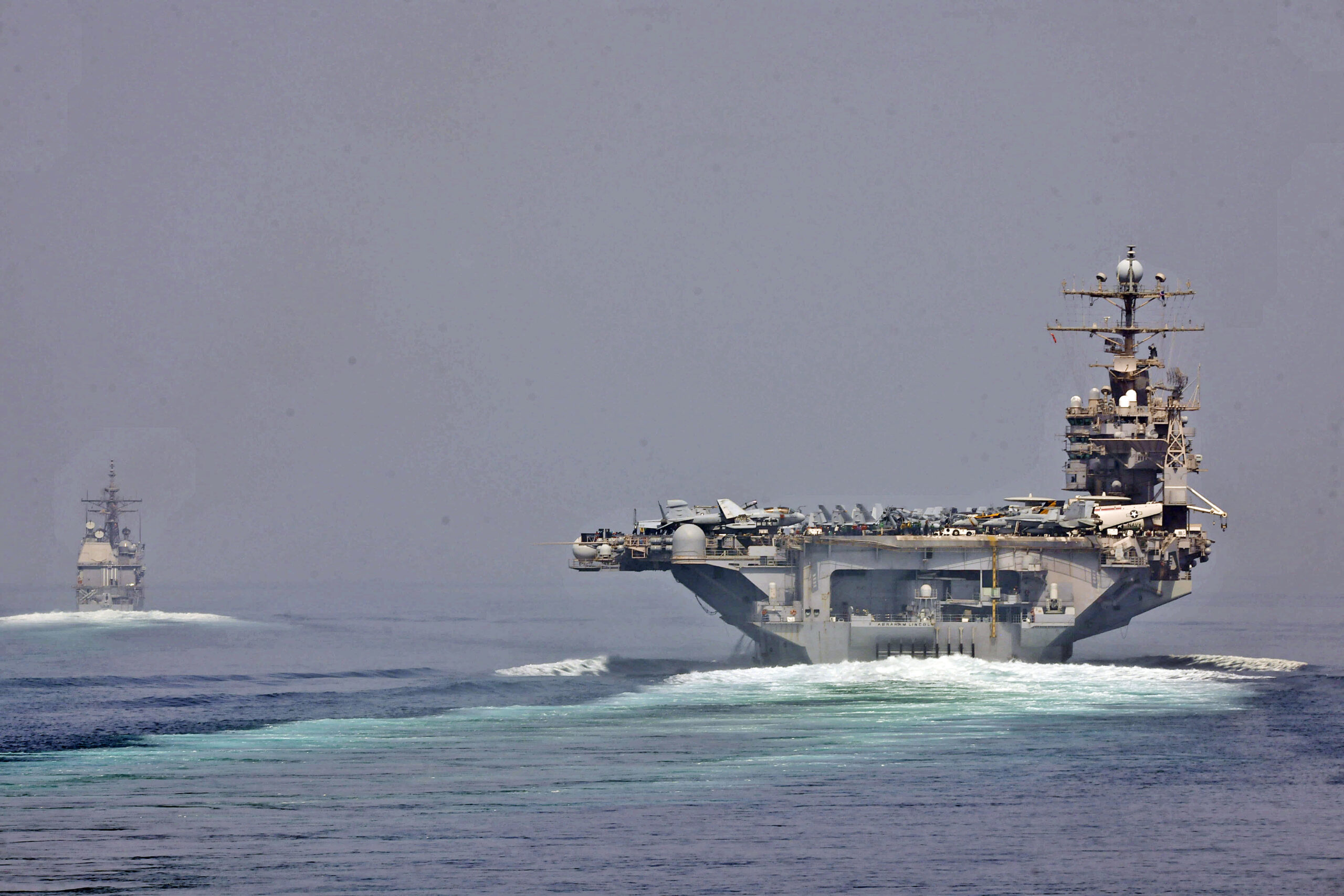
Yemen’s Houthi forces completed their hold on the Bab el-Mandeb Strait this week, and a vessel was struck in the Strait of Hormuz on Sunday — two chokepoints under strain on the same weekend. Saudi Arabia asked Washington to strike the Houthis directly; President Trump said no.
1. Red Sea / Bab el-Mandeb. Houthi forces captured the port of Mokha and then Mayun (Perim) Island around 10–12 September, giving them effective control of both shores of the strait through which roughly 12% of world trade passes. Saudi Arabia shut down its East–West oil pipeline as a precaution. Djibouti’s Obock coast received a reported 1,400 to more than 2,000 Yemeni refugees within 24 hours, according to differing outlet estimates. — CNN; Al Jazeera; NBC News; Euronews, 10–13 September.
2. Strait of Hormuz. An Iranian-flagged commercial vessel was struck off Qeshm Island early on 13 September, killing one crew member and wounding four of ten aboard; Iran’s Qeshm governor blamed a “terrorist enemy,” but authorities said the projectile’s origin had “not yet been identified.” UKMTO separately confirmed a vessel was hit while transiting the strait. — CNBC; CNN; Washington Times, 13 September. No government has claimed responsibility; this remains an unattributed incident.
3. Saudi Arabia / the United States / Yemen. Crown Prince Mohammed bin Salman pressed President Trump over 10–11 September to authorise direct US strikes on the advancing Houthis; Trump declined, offering intelligence and targeting support instead, with roughly 200 US personnel already advising Saudi forces. On 12 September Trump said the Houthis had “called us” to say “they don’t want to fight with us” and were letting most shipping through; Haaretz reported on 13 September that Washington continues to leave Saudi Arabia “to fend for itself” against the Houthi advance. — Axios; CBS News; Middle East Eye; Haaretz, 10–13 September.
4. Gaza. An Israeli strike on a vehicle in Gaza City on 13 September killed two Palestinians the military said were Hamas operatives. The internationally backed Gaza International Stabilization Force remains undeployed, though several countries, including Kosovo, have formally signed on to contribute. — Al Jazeera; Arab News; The Jerusalem Post, 13 September.
Elsewhere in the Middle East — reporting on southern Lebanon conflicted this week: Middle East Monitor reported fresh Israeli airstrikes and artillery fire on 13 September, while other trackers described the two days before as quiet; this briefing could not independently reconcile the two accounts and flags the 13 September strikes as single-sourced. In Syria, Israeli artillery continued to shell the hills around Beit Jinn in rural Damascus through 12–13 September, per Syrian state media and independent regional outlets, with no casualties reported. No further escalation was found in the Israel–UK diplomatic rupture reported in Friday’s briefing.
III · The Great Powers
The balance of power today
Washington, Moscow and Beijing all backed extending Sudan’s arms embargo — for three different reasons — while the United States drew its own line at fighting Yemen’s Houthis directly, even for Saudi Arabia.
1. United States · Russia · China. All three powers backed the Council’s one-month Sudan arms-embargo extension, but for different reasons: Washington called it a stopgap on the way to a full embargo; Russia called any broadening a “red line”; and China’s envoy said sanctions “should not be abused as a political tool,” favouring a ceasefire and political process instead. — UN Press; USUN; China’s UN Mission, 11 September.
2. United States · Saudi Arabia · Yemen. Washington’s refusal to strike the Houthis directly, even after a personal appeal from Crown Prince Mohammed bin Salman, marks a deliberate limit on US military engagement in the Red Sea crisis — intelligence support and freedom-of-navigation messaging, not combat. — Axios; CBS News; ABC News, 10–12 September.
3. China · Russia · India (BRICS). The BRICS summit in New Delhi closed on 13 September with a declaration voicing “grave concern” over Sudan’s “deteriorating situation” and calling for “maximum restraint” in the Middle East; President Xi Jinping urged the bloc to play a “peacemaking role” there. The declaration is notably more cautious than Washington’s Security Council push. — TASS (state media); The National; Business Standard, 12–13 September.
Abdinasir Hassan Timoweyne is Founder and Director of the Nexa Centre and Senior Lecturer in International Relations at New Generation University. He is the author of several published articles on Horn of Africa and Middle East politics.