
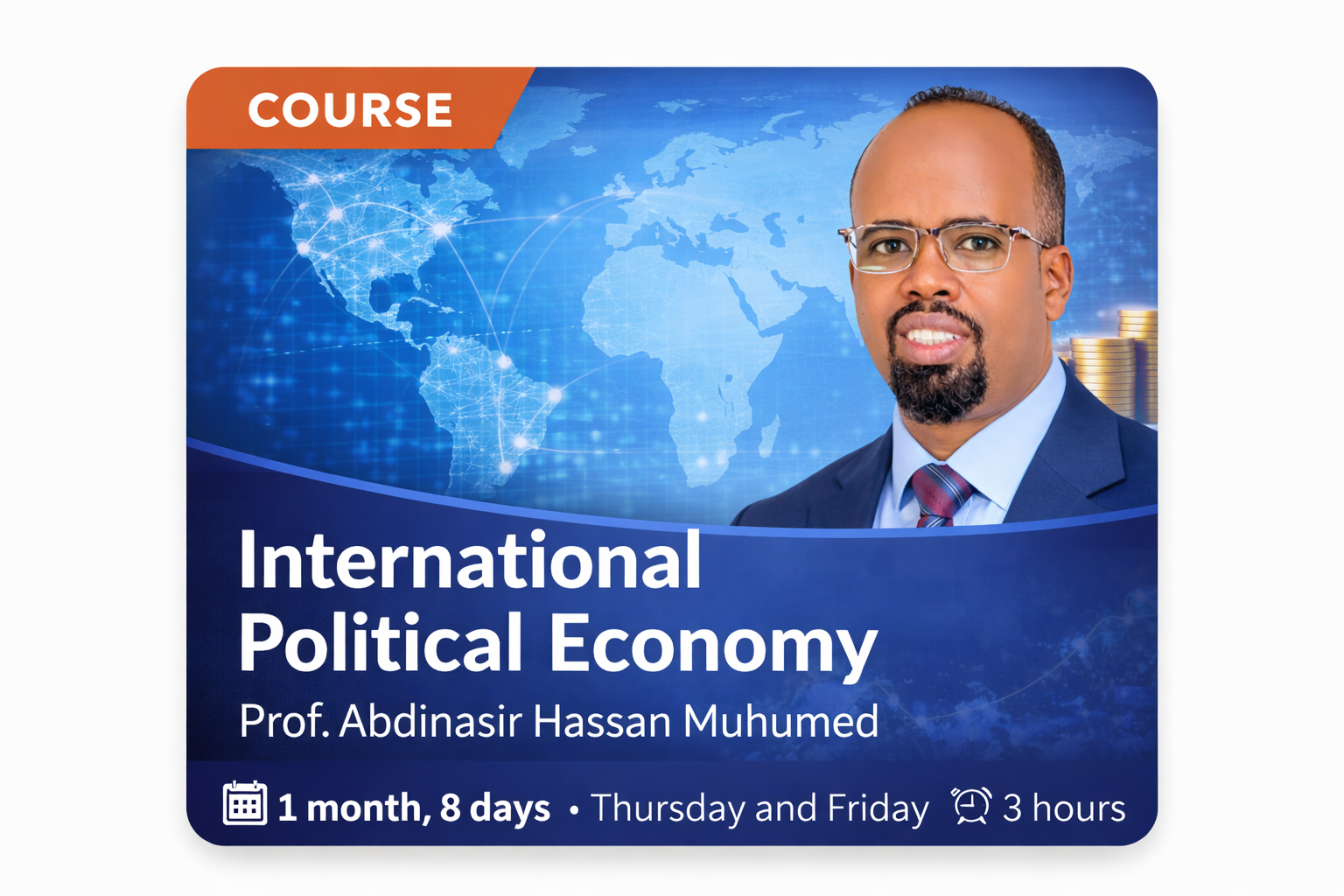
International Political Economy
International Political Economy explores how political authority and economic forces interact and shape one another across the global system. The course compares liberal, economic-nationalist, Marxist, structural, and institutional perspectives while examining trade, monetary policy, international finance, sovereign debt, development strategy, inequality, globalization, and global economic governance institutions. Students analyze the roles played by states, markets, multinational firms, the IMF, World Bank, WTO, and regional economic institutions in shaping outcomes for different countries and social groups. Special attention is given throughout to African development, commodity dependence, industrial policy choices, regional economic integration, and the African Continental Free Trade Area as a live case of institutional change. Lectures, discussions, quizzes, and written assessments help learners connect abstract theory with real policy choices, critically evaluate who gains and who loses from particular economic arrangements, and develop practical, well-reasoned recommendations for inclusive, resilient, and sustainable economic development across Africa, the region, and the world.