
Horn of Africa Weekly Update · Issue No. 10
Recognition, Cables and a Cairo Bloc: The Horn’s External Relations Are Being Rewritten
Nexa Insight · Regional Analysis · Horn of Africa Weekly Update
Reference: NRTC/HAWU/2026-10 | Coverage: 3–6 October 2026, with earlier background where it explains the week | Published: 6 October 2026
The argument in brief
This week’s events look like separate crises: a summit in Egypt, a war in northern Ethiopia, an election in Addis Ababa, a fight over a Sudanese town. They are one system. Three contests now run through the Horn’s external relations: who counts as a state, who controls the sea and the cables that carry its trade and data, and who speaks for the Nile. This issue reads the week through those three contests and asks what each one does to security, the economy, politics and diplomacy in the region’s states.
1. Recognition as a scarce currency: Israel, Somaliland and Taiwan
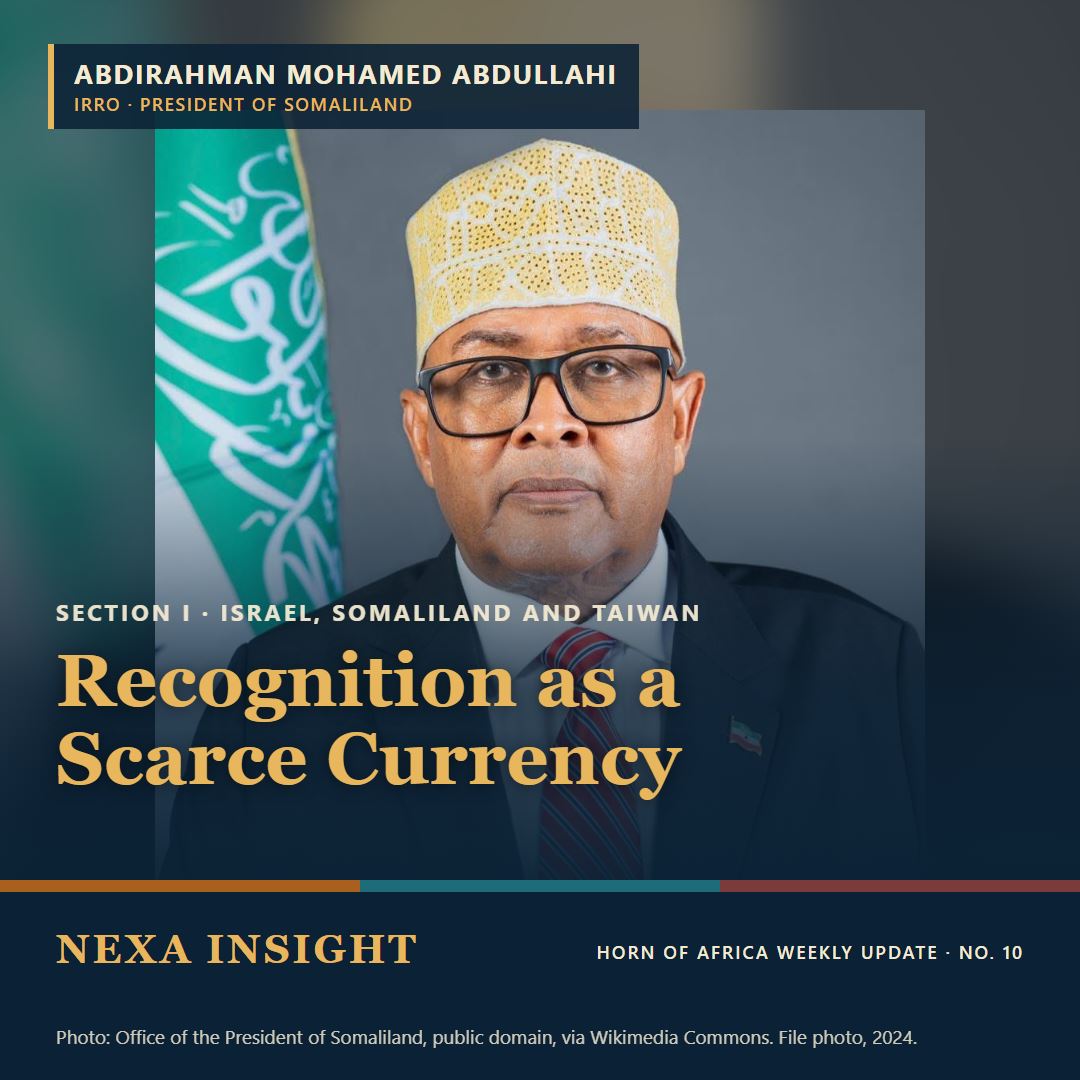
What happened: On 26 December 2025, Israel recognised Somaliland, which had declared independence in 1991 and had never before been recognised by any UN member state. On 12 June 2026, Somaliland opened a representative office in Taipei’s diplomatic quarter. Taiwan’s Deputy Foreign Minister, François Wu, attended and named “maritime security, humanitarian assistance, and infrastructure” as the partnership’s priorities.
Analysis: Recognition is a scarce asset in international society. An unrecognised entity cannot sign treaties, borrow on its own name, or invoke the legal protections that come with membership, however functional its institutions are. Somaliland has spent three decades substituting other relationships for recognition. Taiwan is the closest parallel: a government with working institutions, excluded from most of the diplomatic order, that seeks partners short of formal recognition. The Taipei office is that substitute, and its agenda, as Wu framed it, is practical rather than symbolic. It concerns security at sea and infrastructure, which are the things a small state most needs and least often gets.
Somalia’s federal government condemned the move at once. Egypt’s foreign ministry, after a call with the Somali, Turkish and Djiboutian foreign ministers, stated its “total rejection and condemnation of Israel’s recognition of the Somaliland region” and its “full support for the unity, sovereignty and territorial integrity of Somalia.” Turkey’s president called it “unacceptable” and warned of destabilisation across the Horn. Somaliland’s president welcomed the announcement on X and affirmed the region’s “readiness to join the Abraham Accords.” Somaliland proclaimed independence from Somalia in 1991 and had not been recognised by any other country until now. The United States defended Israel’s move at the Security Council while saying its own position on Somaliland had not changed. The pattern to notice is that those who reject recognition argue in the language of sovereignty, while those who accept it argue in the language of security. Each side has chosen the vocabulary that serves its interest.
Effects: For security, a recognised presence on the Gulf of Aden adds a new actor to the approaches to the Bab al-Mandab strait and a new point of friction with Mogadishu. For the economy, Berbera, Somaliland’s port, gains value to Ethiopia and to any partner seeking a Red Sea foothold. For politics, Somalia’s federal government must defend a unity it cannot enforce in Somaliland. For Hargeisa, it is the first recognition from any state since Somaliland declared independence in 1991. For diplomacy, each new office or recognition hardens the alignments: Mogadishu and Cairo on one side, Jerusalem and Taipei on the other.
2. The sea’s hidden infrastructure: cables and chokepoints

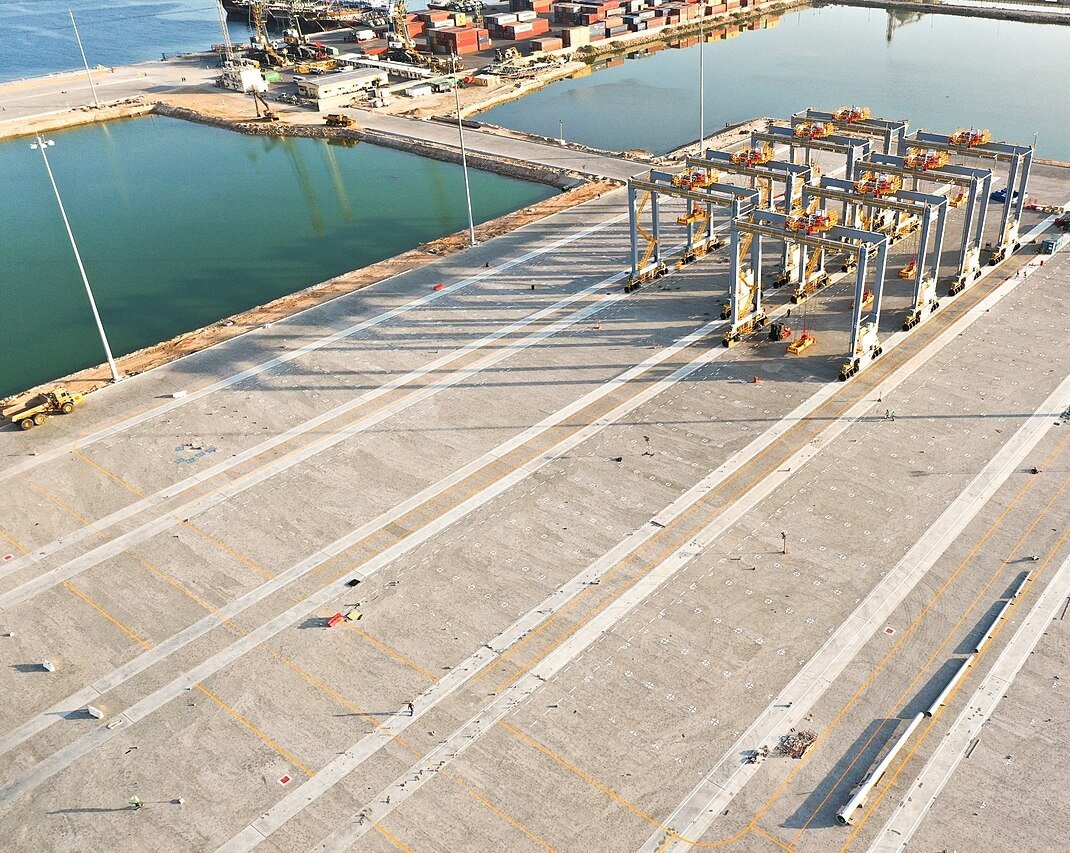
What happened: In February 2024, reports said four undersea cables had been damaged in the Red Sea. Seacom confirmed damage to one cable it operates. Attribution to the Houthis was alleged in reporting, not confirmed, and the Israeli outlet Globes described the damage as “significant, but not critical” because several other cables serve the region. In September 2025, Microsoft reported damage to subsea cables in the Red Sea, with Houthi involvement speculated. Roughly 16 cables carrying traffic between Europe and Asia transit the Bab al-Mandab strait, and at least 12 international systems land in Djibouti (figures sourced by Horn Review to CSIS and The Africa Report). On 28 October 2025, Taiwan’s Ministry of Foreign Affairs launched the RISK Management Initiative on International Undersea Cables. It is built on four objectives: risk mitigation, information sharing, systemic reform and knowledge building. It is anchored in the UN Convention on the Law of the Sea.
Analysis: A cable is infrastructure nobody sees, and its vulnerability is uneven. Cutting one cable costs its operator a fraction of traffic, and damage in a corridor like this is diffuse and hard to attribute. Redundancy is the Horn’s protection, and it is also the reason its exposure is hard to measure. The Globes assessment makes the point: the damage was serious but not critical, because the region has alternatives. That margin is not evenly distributed. It is largest where capital and technical capacity are greatest, and smallest where a state cannot finance its own repair ships or surveillance.
Taiwan’s initiative is best read as an instrument of standards and information. It calls for shared early warning, cross-border repair coordination and “internationally recognized guidelines,” and it invites a broad range of stakeholders to participate. For a state without a UN seat, offering to help write rules for shared infrastructure is a way to take part in global governance without asking for recognition. The RISK initiative and the Somaliland office are therefore two faces of one strategy: an unrecognised actor building standing through functions that others need. I should be clear about the limit of this reading. The initiative’s documents do not mention the Red Sea or the Horn, and I have found no statement from Taipei on the regional incidents. The link is analytical, not stated.
Effects: For security, the risk is sabotage or hybrid disruption, and the attribution problem means states cannot easily respond. For the economy, an outage in Djibouti is an outage for the whole corridor’s customer base, including Ethiopia. For diplomacy, the question is who writes the standards for repair and information sharing, and whether the Horn’s states are at the table or only subject to the rules.
3. Ethiopia’s single corridor and the sea-outlet pledge
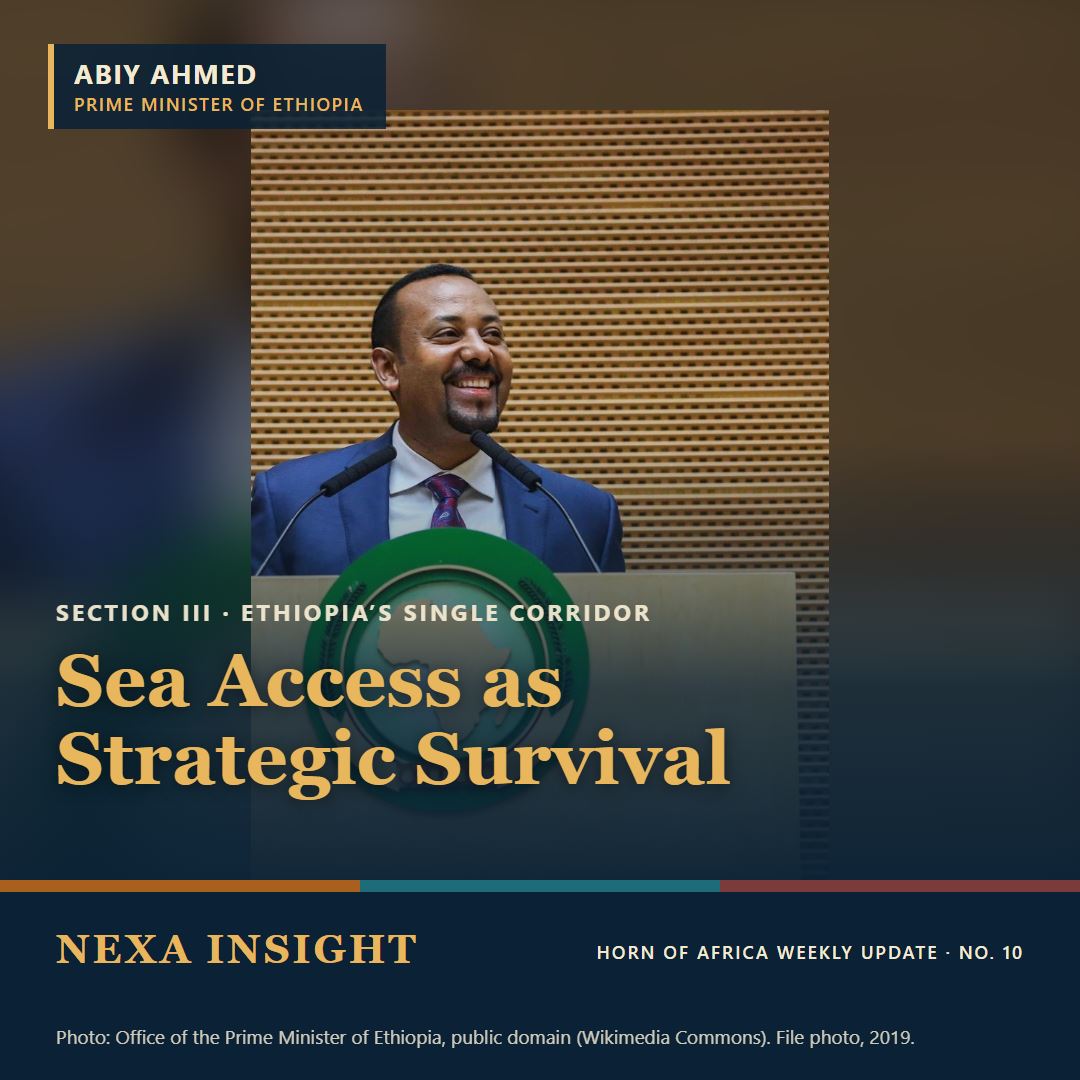
What happened: On 5 October, the newly constituted House of Peoples’ Representatives re-elected Abiy Ahmed as prime minister for a second five-year term. The National Election Board said more than 54 million citizens took part in the 1 June general election, and that the Prosperity Party won 438 of the 486 seats for which results had been announced. In remarks reported by allAfrica, Abiy said: “We will work tirelessly to ensure Ethiopia secures a sea outlet.” The economic background is this: at least 90 per cent of Ethiopia’s international trade passes through the Port of Djibouti, according to 2024 data from Imports Global, cited by The Reporter Ethiopia.
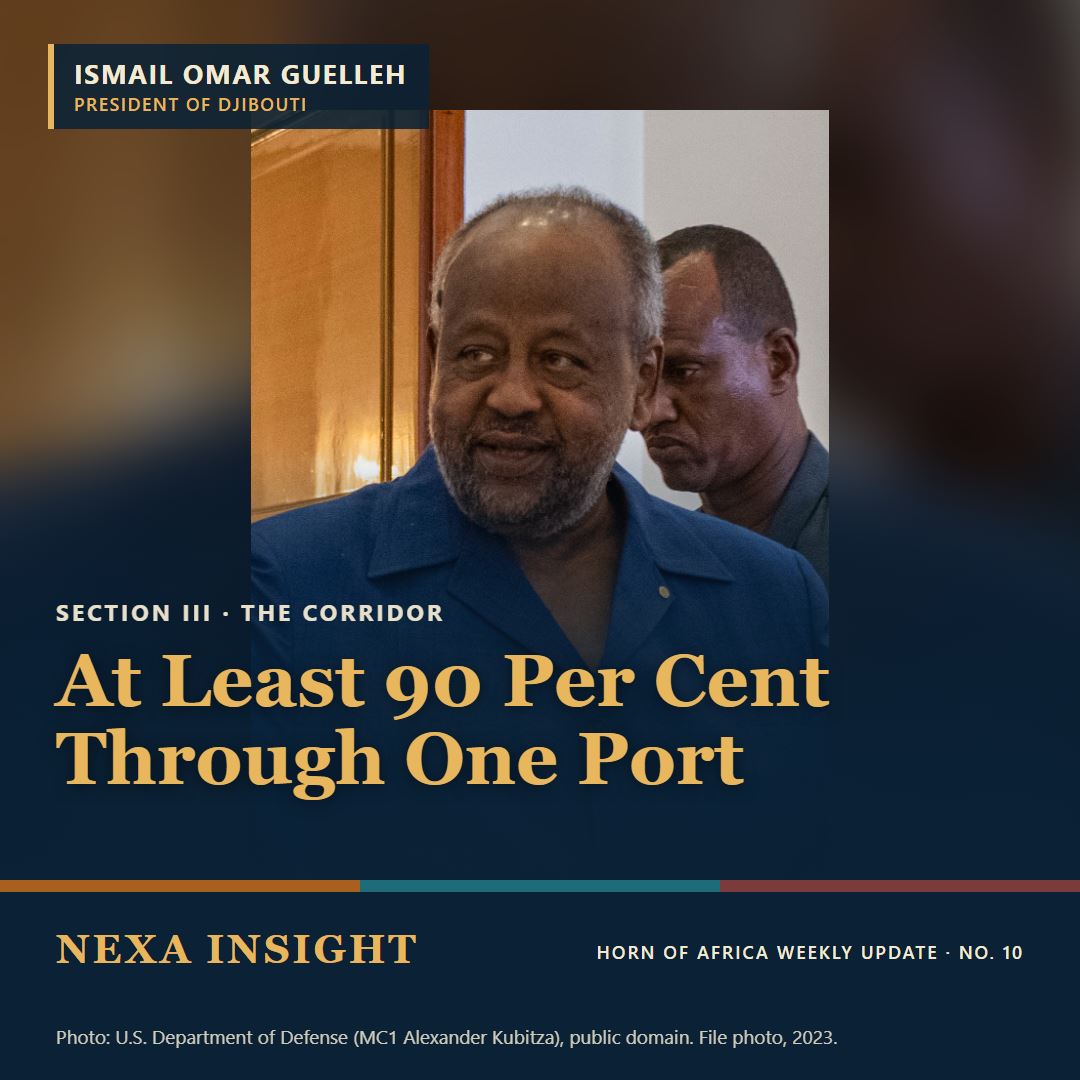
Analysis: A state that routes nine-tenths of its external trade through one port of another country is, in economic terms, a customer of a single corridor, not a fully sovereign coastal state. That dependence explains why the sea outlet is not an ornament of nationalist politics but a question of strategic survival. A disruption at Djibouti, or a dispute with its government, would reach every Ethiopian importer. Abiy’s pledge turns that exposure into a foreign-policy aim.
The political logic is equally clear. The new parliament gives Abiy a majority that no rival can contest in this term, so a sea policy will face no domestic check. The pledge came the same week that Cairo’s bloc declared Red Sea governance the preserve of littoral states, a category Ethiopia does not belong to. The bloc’s declaration is, in balancing terms, a rival’s answer to a rising claim.
A second reading of the new term concerns inclusion. Under the TPLF-led coalition that ruled until 2018, the Somali region was governed largely through force. An account by an ONLF central committee member, a party to that dispute, describes federal campaigns “particularly under TPLF leadership” against civilians between 1994 and 2018, including “extrajudicial killings, torture, imprisonment, rape, and forced displacement.” The Asmara agreement of 21 October 2018 recognised the ONLF’s right to pursue its goals through peaceful means. The Oromo protests of 2015–2018, which the government met with force under a state of emergency, pressed a parallel grievance from the other side of the country. On 5 October, the seventh parliament elected Ahmed Shide, an ethnic Somali, as speaker. Dawan and Kaab TV describe him as the first Somali to lead the lower house. Garowe Online describes him more narrowly, as among the highest-ranking officials of Somali descent. Shide has served as finance minister for nearly eight years, after earlier posts as transport minister and speaker of the Somali regional parliament. For the Horn, the appointment is a signal that Somali communities in Ethiopia, Somalia, Djibouti and Kenya will read closely. We found no published reaction from them in the English or Somali-language reporting we checked. The author’s own observation, from his experience in the region, is that the appointment was very welcomed across the Horn, where Somali communities are numerous. That observation is recorded as the author’s experience, not as a reported fact, and it awaits published confirmation. The limit of this reading is equally clear. Symbolic inclusion in parliament does not settle security grievances, and Addis Standard has reported that promises under the Somali region deal remain unmet and that the risk of insurgency is rising. The speakership strengthens Abiy’s claim to speak for the periphery. It does not yet answer the question the periphery is asking.
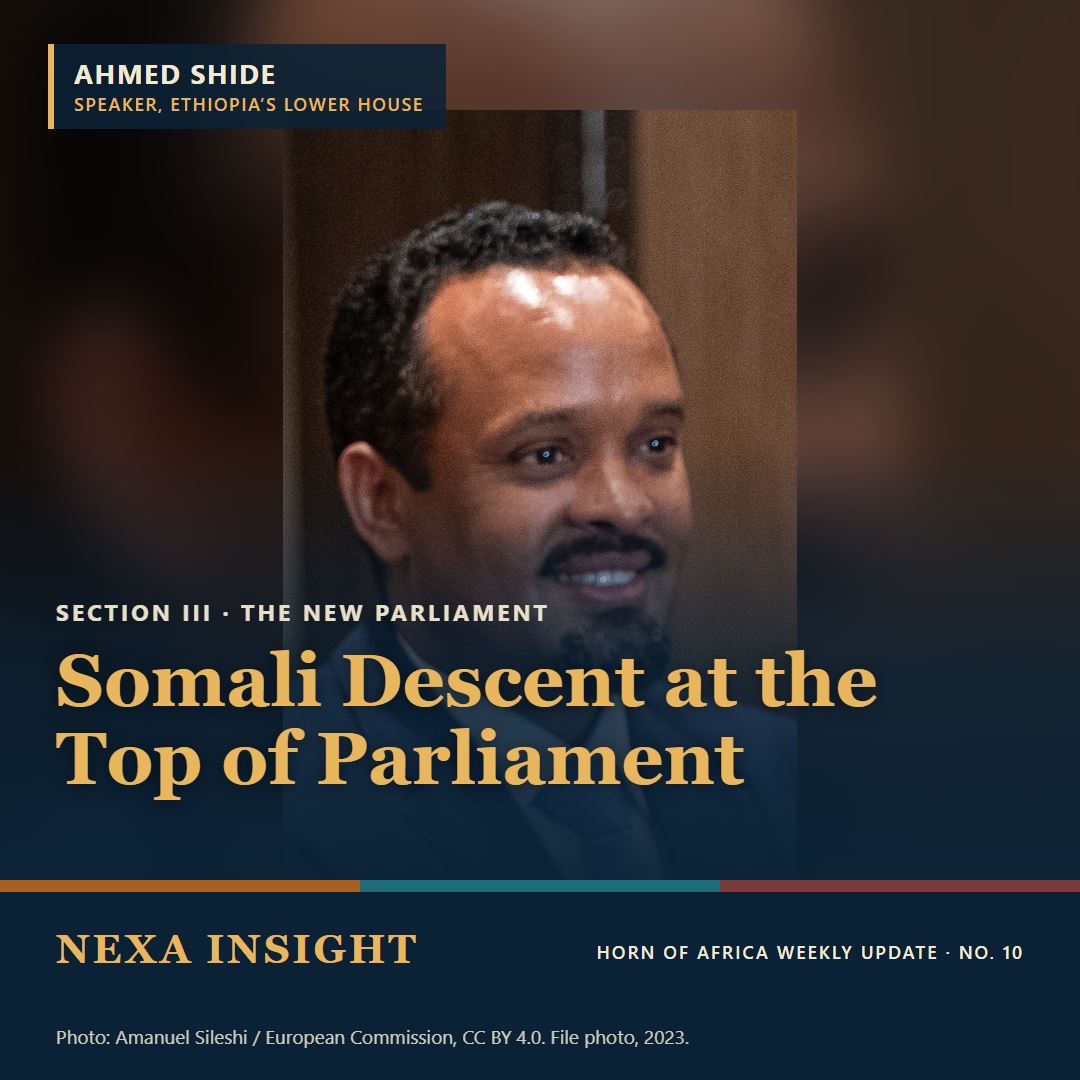
Effects: There are three routes to the sea, and each carries a different cost. Eritrea is closed for now, since Addis Ababa and Asmara severed ties on 1 October. Djibouti controls the corridor, so any agreement depends on its government’s own calculations. Somaliland has an agreement with Ethiopia from 2024, which allAfrica reports was later framed toward Ethiopian sea access “under Somali sovereignty,” but Mogadishu opposes Somaliland’s external ties and now has Cairo’s backing. Somaliland’s president has publicly welcomed Israel’s recognition and affirmed readiness to join the Abraham Accords, while Mogadishu officially rejects ties with Israel. Since Israel’s recognition and Taipei’s office, the Somaliland option also carries external dimensions that Addis cannot fully control. For security, a push for sea access raises the risk of friction in Afar and along the Eritrean frontier. For the economy, diversification away from Djibouti would be slow and expensive, because the corridor was built around a single route. For politics, the sea becomes the defining question of the new term. For diplomacy, every sea option requires another state’s consent.
4. Cairo’s bloc at New Alamein, and Addis’s answer
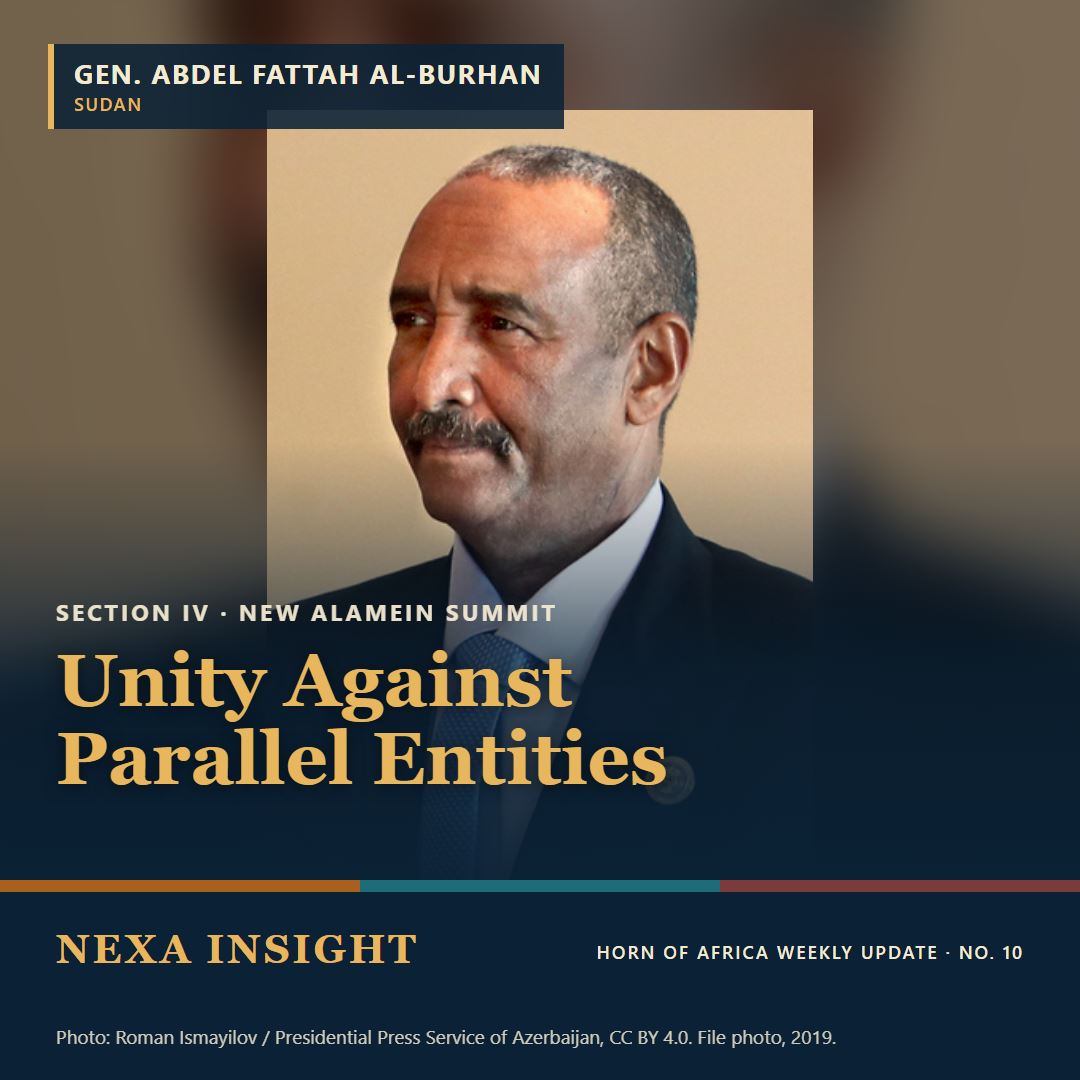
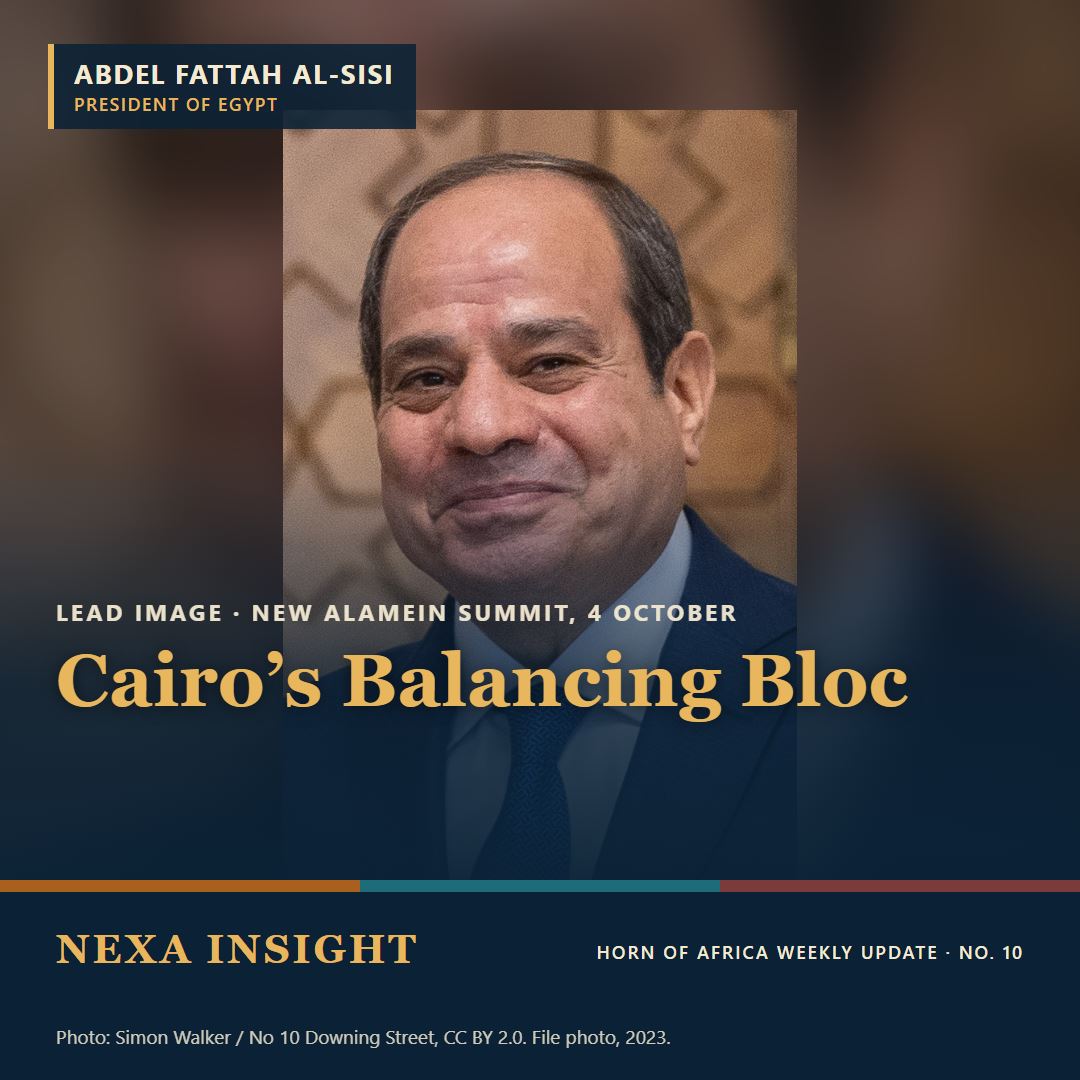
What happened: On 4 October, President Abdel Fattah al-Sisi hosted Gen. Abdel Fattah al-Burhan of Sudan, Isaias Afwerki of Eritrea and Hassan Sheikh Mohamud of Somalia at New Alamein. The joint statement says the leaders “agreed to strengthen political, trade and economic cooperation.” It affirms “the role of Red Sea littoral countries in governing the strategic waterway,” and it backs “the unity, sovereignty, territorial integrity and national institutions of the Republic of Sudan,” rejecting “the establishment of any parallel entities.” On the Nile, it stresses “no harm” principles and prior notification and consultation. Sisi told the leaders that transnational issues “require co-operation, not competition; dialogue not confrontation.” On 5 October, Ethiopia’s foreign ministry replied: “These geographic and historical realities cannot be altered by political rhetoric, coercive measures, or acts of destabilization.”
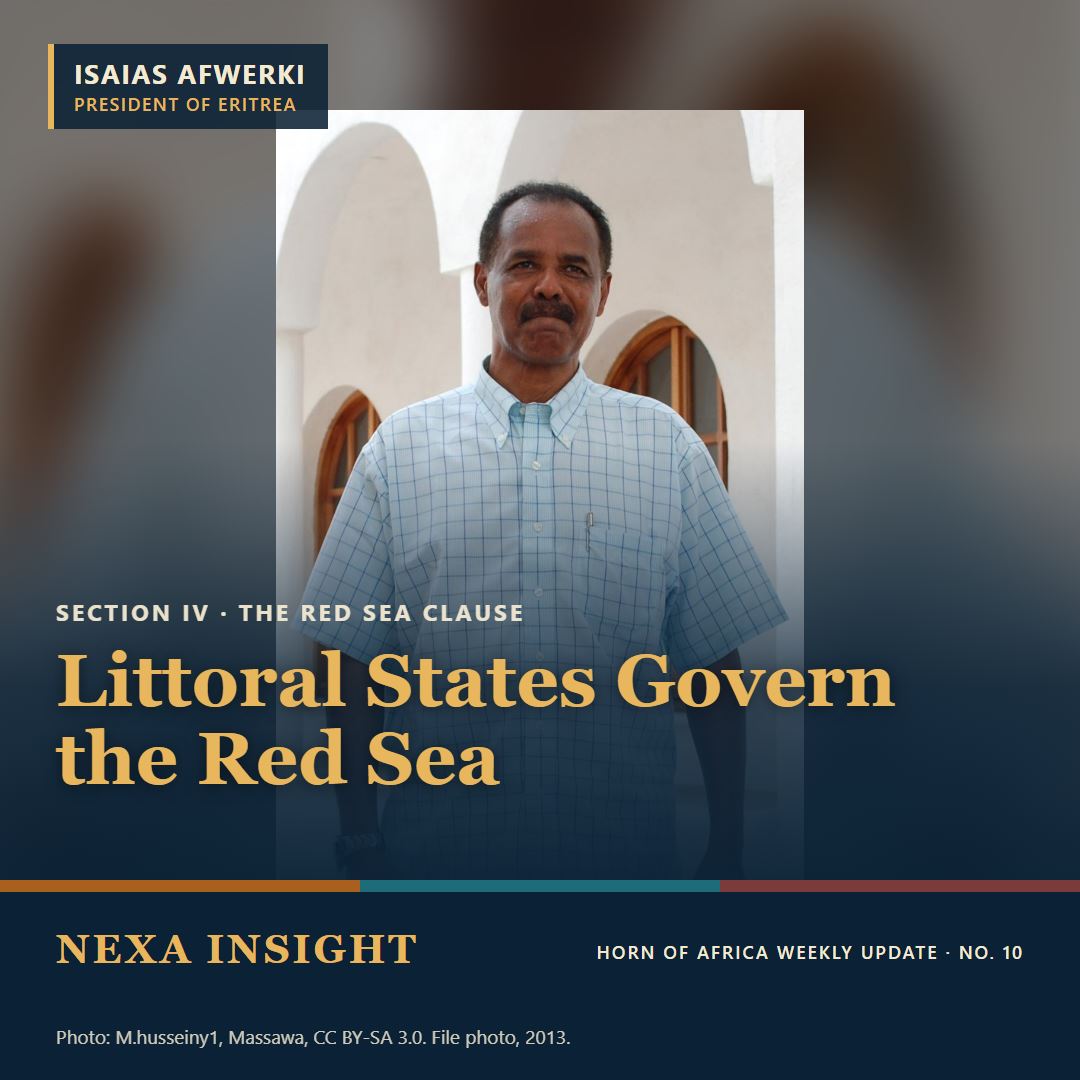
Analysis: The Alamein bloc is a balancing coalition, the familiar response of weaker states to a rising power. Its members share a grievance against Ethiopia on three fronts: the Nile dam, the Red Sea, and the Tigray war. Their interests differ, though. Egypt’s is the Nile, Sudan’s the survival of its army, Eritrea’s its Red Sea position, and Somalia’s its territorial integrity. The bloc is strongest where these interests meet, and that is the Red Sea clause, which denies Ethiopia a voice in the maritime order by definition.
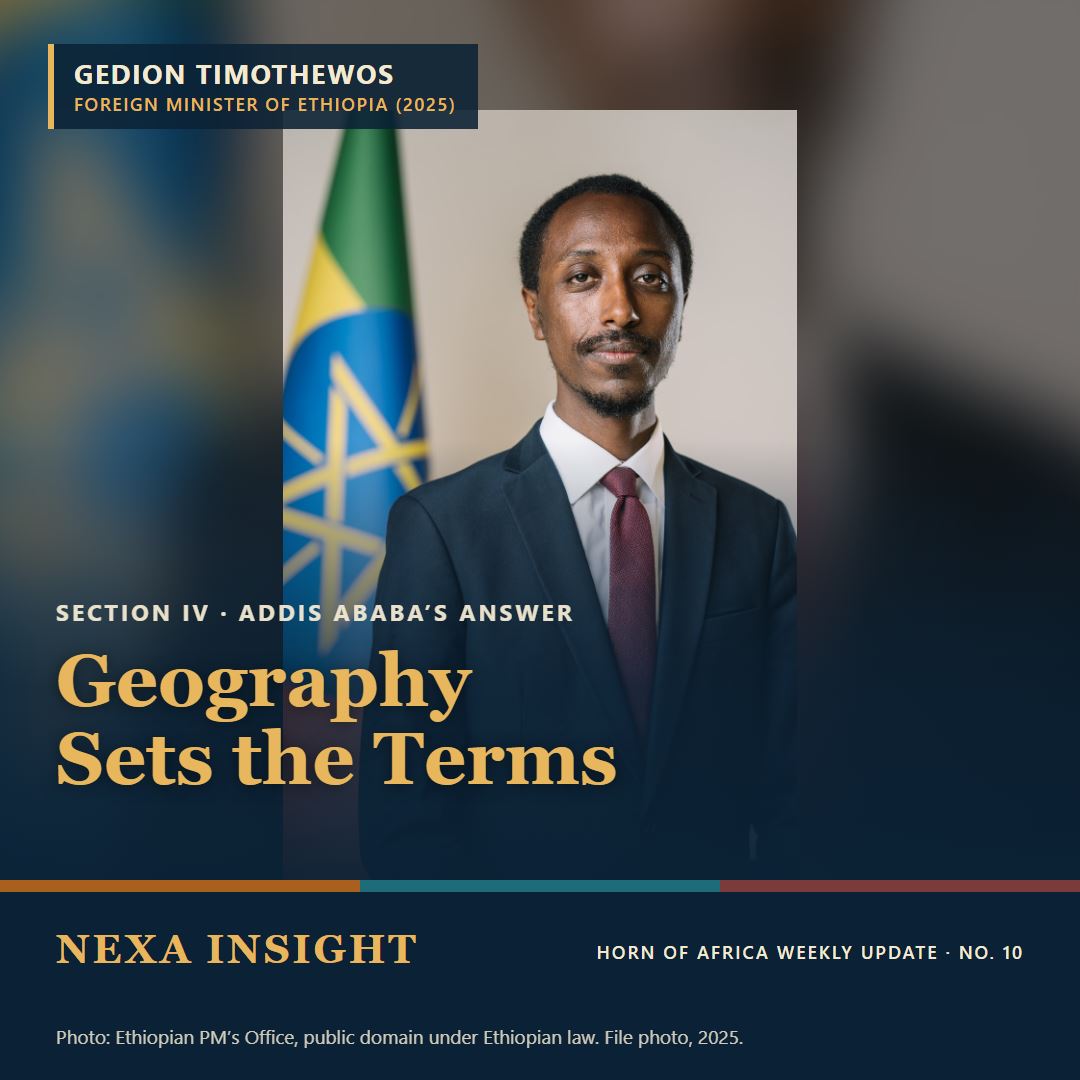
Ethiopia’s reply is well judged. It does not reject the Nile principles of prior notification and consultation. It argues that geography sets the terms, and it says the Blue Nile rises in the Ethiopian highlands and supplies roughly 85 per cent of the river’s flow, a figure Ethiopia offers and we have not independently checked. By accepting the language of consultation while contesting the claim of exclusive coastal rights, Addis presents itself as the party seeking dialogue. Both sides claim that ground. When two adversaries invoke the same vocabulary, the contest is decided by ports, water and arms rather than by wording.
Effects: Egypt and Eritrea gain the most leverage from the bloc. Sudan gains diplomatic cover but depends on Egyptian support in a war that has no end in sight. Somalia gains backing for its territorial integrity, but it joins a bloc whose members are at odds with its own neighbour. One caveat matters. Sources told reporters that the summit would announce expanded military cooperation to protect Red Sea shipping, and press summaries say the declaration rejects recognition of Somaliland. Neither appears in the joint-statement texts we checked, so we do not treat either as established.
5. Sudan and Tigray: wars judged by their external sponsors
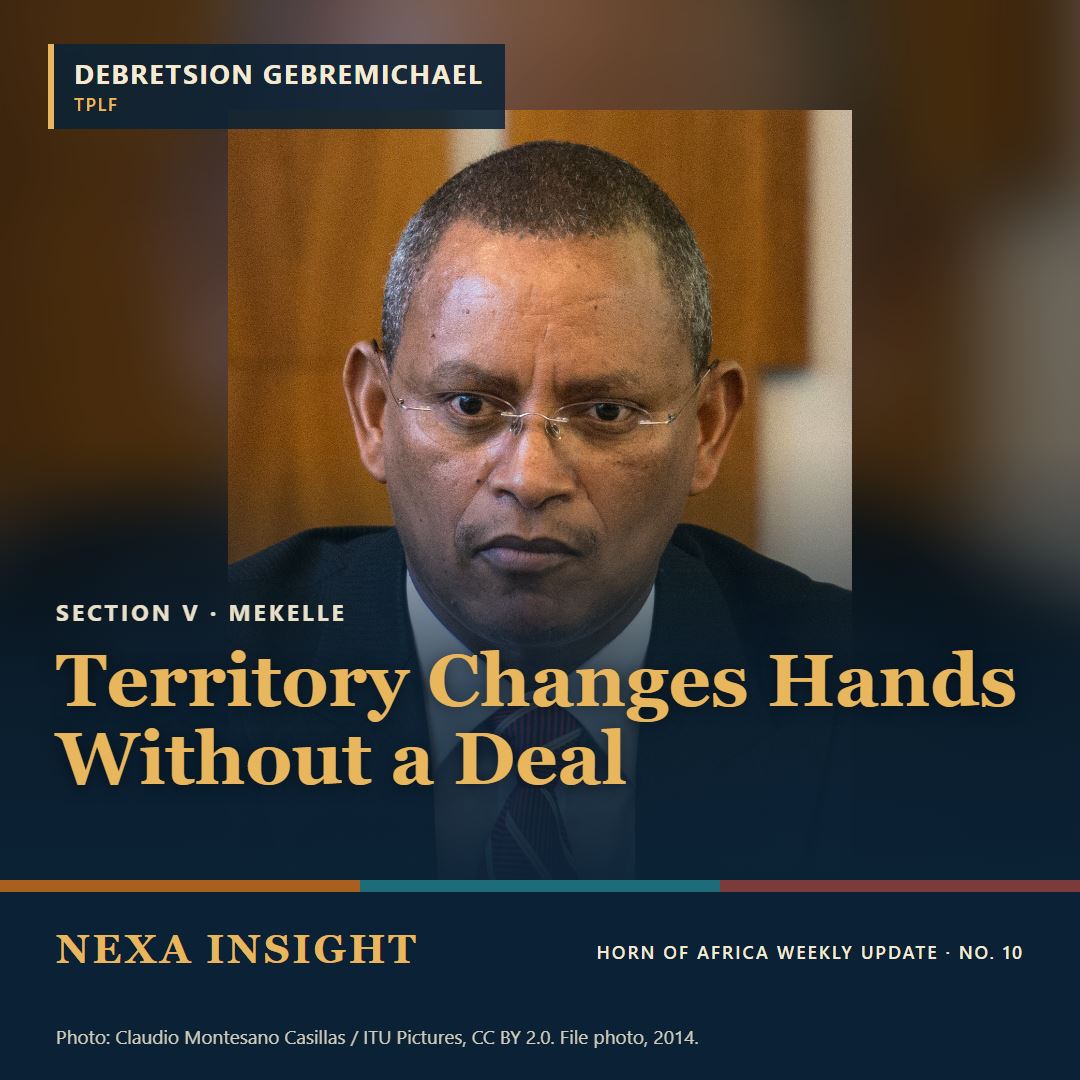
What happened: On 3 October, federal forces and the government-aligned Tigray Peace Forces took Mekelle, the regional capital. The TPLF said it had “temporarily moved out of Mekelle” to “operate from somewhere else.” On 2 October, the Sudanese army said it had captured al-Mazroub in North Kordofan, a town Al Jazeera described as the RSF’s largest stronghold in the region. On 6 October, the UN Human Rights Council adopted a resolution extending its Sudan fact-finding mission by 28 votes to 10, with nine abstentions, and demanded “an immediate and complete ceasefire by all parties, without preconditions.”
Analysis: Both wars are now judged by their external sponsors. Ethiopia accuses Eritrea of backing armed groups opposed to its government, including the TPLF. Eritrea says both sides have rejected each other’s accusations. Ahmed Soliman of Chatham House has described the interconnection: “The conflicts in Ethiopia and Sudan have become more interconnected, with the Ethiopian government and Sudanese Armed Forces accusing each other of harbouring and equipping respective opposition forces from inside their own borders.” In that account, the war is not a contest between two parties but a contest over who controls the other side’s external relations. That turns diplomacy from mediation into accusation.

The Council’s vote shows the same division in a multilateral forum. A majority will condemn civilian harm, but ten votes against and nine abstentions show that not all states will make the same judgment. The Council can name, monitor and report. It cannot compel.
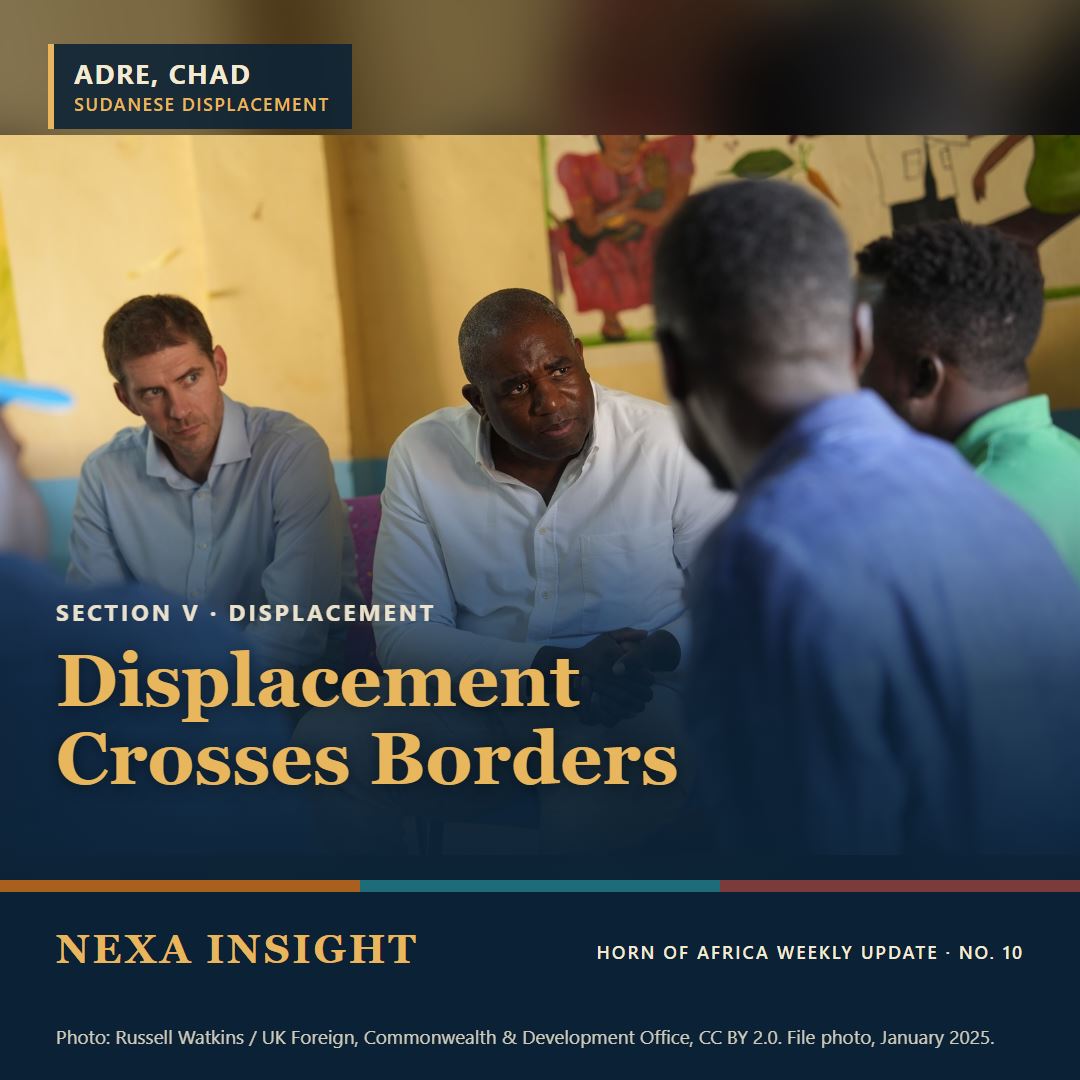
Effects: For security, territory is changing hands, as Mekelle and al-Mazroub show, without a settlement. For the economy, displacement and hunger continue. A UN-backed projection, reported in late September, puts 5.4 million people in Somalia at crisis-level hunger or worse from October to December. For politics, both the army and the TPLF need to hold ground to claim legitimacy. For diplomacy, the sponsors, not the mediators, will shape the endgame.
The effects at a glance
| Country | Security | Economy | Politics | Diplomacy |
|---|---|---|---|---|
| Ethiopia | Two active fronts; hostile northern border | At least 90% of trade on one corridor | New term; sea outlet is the central aim | Isolated in Cairo’s bloc; must answer on its own terms |
| Eritrea | Accused of backing the TPLF; Afar border exposure | Red Sea port position gains weight | Regime benefits from rivalry, faces isolation | Severed ties with Ethiopia; a Cairo partner |
| Sudan | Army–RSF war; al-Mazroub contested | Displacement and hunger; war economy | Army’s legitimacy rests on ground gains | Cairo bloc backing; visa dispute taken to the UN |
| Somalia / Somaliland | Al-Shabaab; Somaliland’s coast exposed to recognition politics | Berbera’s value rises with recognition; 5.4m in crisis hunger | Federal unity versus regional autonomy; UNTMIS ends 31 October | Rejects Israel’s recognition of Somaliland; Cairo partner. Somaliland welcomes the recognition; Taipei and Jerusalem dimension |
| Djibouti | Cable hub exposed to Bab al-Mandab shocks | At least 12 cable systems land there; handles most of Ethiopia’s trade | Corridor state whose stability matters to Addis | Caught between Addis’s sea demand and its own corridor revenue |
| Egypt (external) | Red Sea and Bab al-Mandab safety; Sudan and Eritrea alignment | Suez revenue depends on Red Sea safety | Nile dispute with Ethiopia | Leads the Alamein bloc |
Elsewhere in the Horn: The UN political mission in Somalia, UNTMIS, ends on 31 October. The UN-backed hunger projection stands, and no development this week in Somalia cleared our verification standard beyond it.
Briefing points for regional decision-makers
- On recognition: Judge unrecognised-state diplomacy, from Taipei to Berbera, by the functions it promises, not by its symbolism. Maritime security and infrastructure are where it will have effects.
- On the sea: Treat Ethiopia’s sea-outlet pledge as the central variable of the new term. Any move toward Eritrea, Djibouti or Somaliland needs a contingency plan for an outage in the corridor.
- On cables: Commission an assessment of Red Sea cable resilience before the next incident. Redundancy is the main protection, and it is unevenly distributed.
- On Cairo’s bloc: Read the Red Sea clause as a political position until the bloc attaches shipping protection or military cooperation to it.
- On the UN: Judge the Human Rights Council’s vote by whether its monitoring mechanism reaches the ground.
Bottom line
The Horn’s external relations are being rewritten around three contests: recognition, access to the sea, and control of the Nile. This week’s events are the same contest in different arenas: a Taipei office, a Cairo summit, an Addis election, a Tigray front and a Kordofan town. The actors who gain are those with functions others need, whether ports, cables, water or recognition.
Conclusion
In the next issue we will track whether Ethiopia’s sea-outlet pledge gains a concrete step, whether the Alamein bloc gives its Red Sea clause a mechanism, whether any Red Sea cable incident recurs and how it is attributed, and whether Somaliland’s external relations widen beyond Taipei and Jerusalem.
References
Al Jazeera (2025). Israel’s recognition of Somaliland “strange, unexpected”, Somali president says, 31 December. aljazeera.com
Focus Taiwan (2026). Somaliland opens new representative office in Taipei’s Tianmu area, 12 June. focustaiwan.tw
Taiwan Ministry of Foreign Affairs (2025). RISK Management Initiative on International Undersea Cables, Taipei, 28 October. ws.mofa.gov.tw
The Register (2024). Red Sea cable cuts, 27 February. theregister.com
Horn Review (2026). Djibouti and Subsea Cable Security: The Geopolitics of Digital Infrastructure, 12 June. hornreview.org
The Reporter Ethiopia (2026). A Tale of Two Countries: Why the Djibouti–Ethiopia Corridor Is a Shared Economic Lifeline (citing Imports Global, 2024). thereporterethiopia.com
Al Jazeera (2026). Ethiopia–Eritrea break ties: Does the conflict risk becoming a regional war?, 2 October. aljazeera.com
Al Jazeera (2026). Eritrea severs diplomatic ties with Ethiopia in tit-for-tat move, 1 October. aljazeera.com
The National (2026). Egypt hosts four-way summit as tensions with Ethiopia escalate, 4 October. thenationalnews.com
Al-Monitor (2026). Egypt, Eritrea, Somalia and Sudan hold summit amid Ethiopia tensions, 4 October. al-monitor.com
allAfrica (2026). Egypt, Eritrea, Somalia and Sudan Converge As Tensions With Ethiopia Deepen, 5 October. allafrica.com
allAfrica (2026). Ethiopia Pushes Back After Al-Alamein Summit, 6 October. allafrica.com
allAfrica (2026). Ethiopia Opens a New Five-Year Chapter of National Renewal, 6 October. allafrica.com
Trends Africa (2026). Abiy Ahmed Re-Elected As Ethiopia’s Prime Minister For Another Five-Year Term, 5 October. trendsnafrica.com
Al Jazeera (2026). Ethiopian government forces seize capital of Tigray region from rebels, 4 October. aljazeera.com
Al Jazeera (2026). Sudan’s army says it captured RSF stronghold in North Kordofan, 2 October. aljazeera.com
Al Jazeera (2026). UN rights council condemns attacks on civilians in Sudan, calls for truce, 6 October. aljazeera.com
Rio Times (2026). Somalia Explained: Al-Shabaab, Somaliland, the Ports and the Fight Over a 2026 Vote, 27 September. riotimesonline.com
Dawan (2026). Ethiopia’s Parliament Elects Ahmed Shide as Speaker, First Somali in Role. dawan.africa
Kaab TV (2026). Ahmed Shide Becomes First Somali to Lead Ethiopia’s Lower House. en.kaabtv.com
Garowe Online (2026). Ahmed Shide Elected Speaker of Ethiopia’s House of Peoples’ Representatives. garoweonline.com
Addis Standard (date not confirmed). From Truce to Threat: New path to insurgency looms over Somali region amid unmet peace deal promises with ONLF. addisstandard.com
The Reporter Ethiopia (2025). Peace, Politics, and Progress: The Transformation of Somali Region, 3 May. thereporterethiopia.com
Hagmann, T. LSE Conflict Research Programme memo on the Somali region (PDF, undated). lse.ac.uk
EISA (2022). The Transformative Power of the Oromo Protests: Ethiopia’s Resilience and Political Change, Journal of African Elections, 21(2). eisa.org
Ahmed Shide, biography (Wikipedia; cited for his earlier posts, accessed October 2026). en.wikipedia.org
Jewish Telegraphic Agency (2025). Israel becomes first country to recognize Somaliland, drawing condemnation from Egypt, Turkey and Somalia, 26 December. jta.org
Abdinasir Hassan Timoweyne is Founder and Director of the Nexa Centre and Senior Lecturer in International Relations at New Generation University. He is the author of several published articles on Horn of Africa and Middle East politics.
Get Nexa Insight by email
Daily Briefings and Weekly Updates on the Horn of Africa, the Middle East and the great powers — delivered the moment they’re published.