
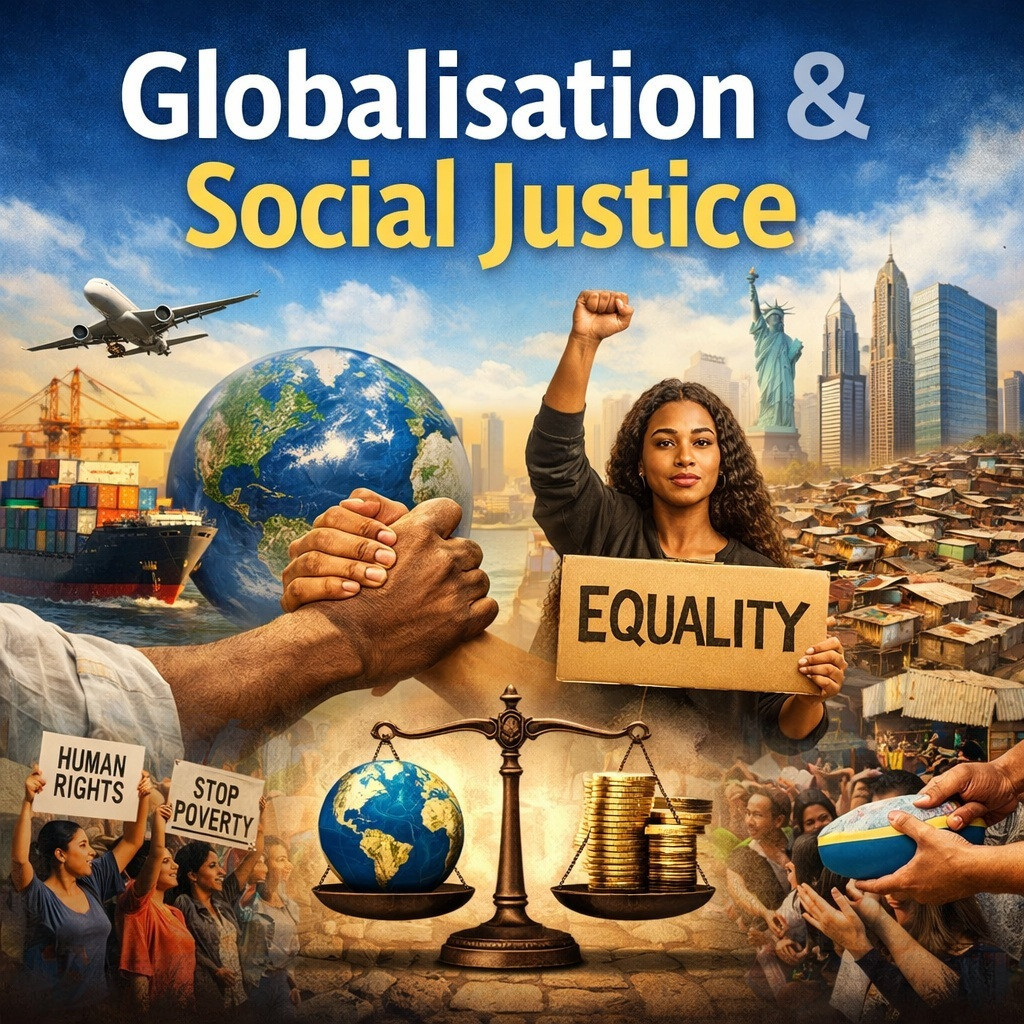
Globalisation & Social Justice
Globalisation and Social Justice examines how economic integration, political institutions, migration, technology, culture, and environmental change interact to shape opportunity and inequality worldwide. Students compare liberal, critical, postcolonial, feminist, and human-rights perspectives while carefully evaluating the roles of governments, corporations, international organizations, and grassroots social movements in driving or resisting global change. The course connects abstract theory to contemporary debates about labor rights, gender equity, global governance reform, climate justice, digital transformation, and persistently unequal patterns of development across regions. Through guided readings, seminar discussions, quizzes, written assignments, and applied case studies, learners develop the ability to identify who genuinely benefits from globalization, who bears its greatest costs, and which realistic policy reforms could make global economic integration more equitable, inclusive, and environmentally sustainable. Students finish equipped to critically evaluate globalization debates using evidence rather than ideology, and to propose grounded, workable solutions to pressing global social justice challenges.