
Horn of Africa Weekly Update · Issue No. 8
Two Deals Undone: Ethiopia’s Peace Collapses as Iran’s Hormuz Offer Is Rejected
Nexa Insight · Regional Analysis · Horn of Africa Weekly Update
Reference: NRTC/HAWU/2026-08 | Coverage period: 15–26 September 2026 | Published: 26 September 2026
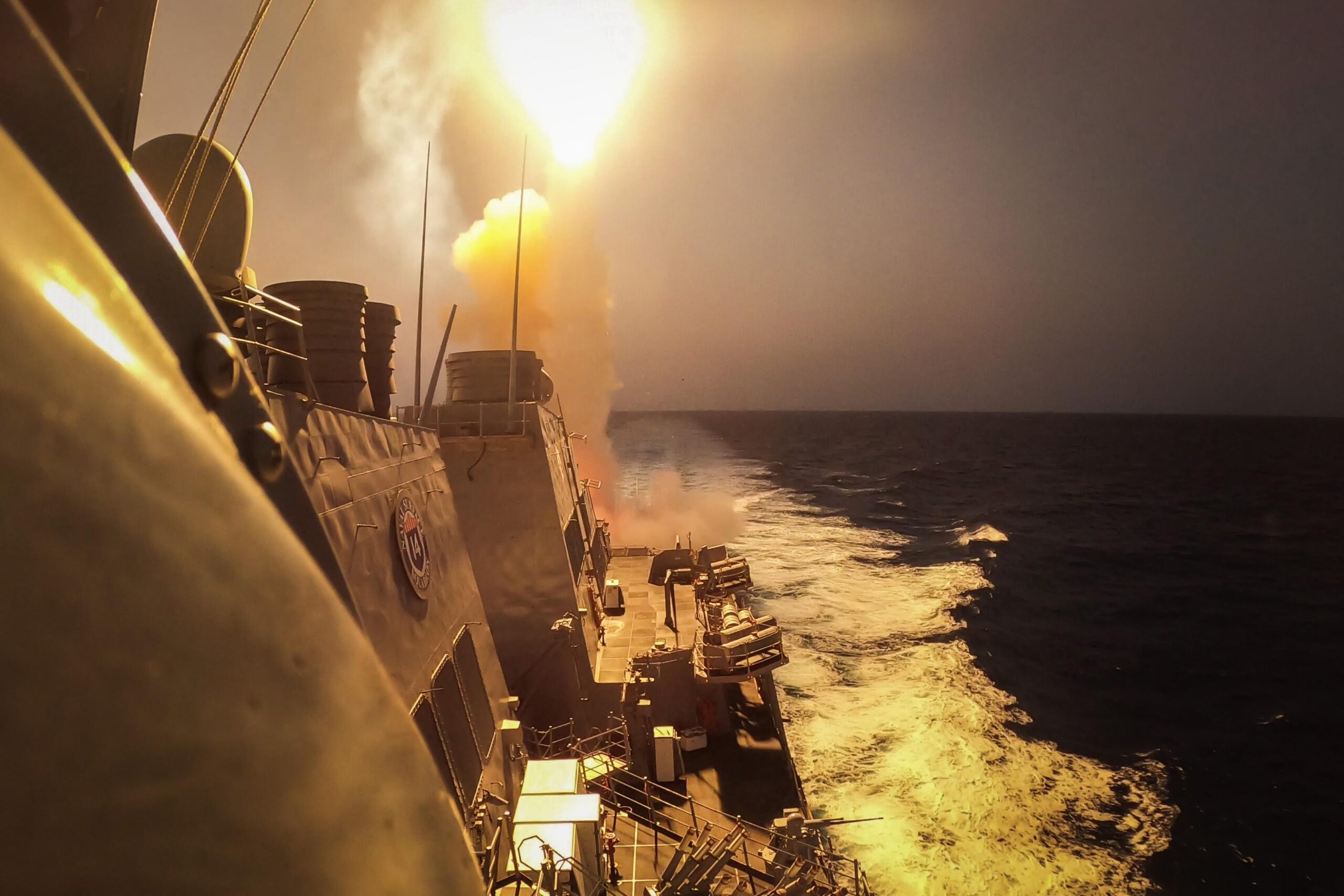
These twelve days
Ethiopia’s civil conflict returned to open war, shattering the 2022 Pretoria peace deal. Iran offered a concrete plan to reopen the Strait of Hormuz, and Washington turned it down. Sudan’s army chief was frozen out of the UN by his own host country, and South Sudan dissolved its transitional government. Djibouti kept absorbing a Yemeni refugee wave that has now roughly quadrupled since this issue’s last look.
This has been a longer stretch than usual between issues — twelve days rather than the normal four to six — and the region did not wait for this briefing’s schedule to catch up. Two threads dominate it. The first is Ethiopia, where a new seven-group rebel alliance announced on 20 September had, within days, tipped the country back into what a Tigrayan military official called “a full war,” effectively ending the fragile calm of the November 2022 Pretoria agreement. The second is the Strait of Hormuz, where Iran spent the period moving from a vague offer to a concrete, mediated, seven-day reopening plan — only to have President Trump reportedly turn it down days later, at the same UN General Assembly session where he had opened the week by threatening to “annihilate” the Islamic Republic. Around those two stories, Sudan’s war ground on with a new diplomatic freeze, South Sudan reorganised its government by decree, and the Red Sea corridor kept absorbing shocks — military, humanitarian and diplomatic — on almost every front this briefing tracks.
Ethiopia · Eritrea
A seven-group rebel alliance formed on 20 September; by 23–25 September, fighting across Tigray, Afar and Amhara had become what one Tigrayan official called “a full war.” Washington lifted sanctions on Eritrea days earlier, even as Ethiopia accused Asmara of bankrolling the rebels.
1. Ethiopia’s War Returns, and Eritrea’s Sanctions Relief Sits Uneasily Beside It
Seven Ethiopian opposition and armed groups — including the Tigray People’s Liberation Front, the Amhara Fano National Movement and the Oromo Liberation Army, historic rivals as recently as the 2020–2022 Tigray war — announced a formal coalition on 20 September, read live on Tigrai TV by Fano chairman Zemene Kassie and independently confirmed by Al Jazeera and Reuters. The UN said the next day it was “deeply concerned” and urged dialogue. That concern proved warranted: by 23–25 September, federal forces and the new alliance were fighting across Tigray, Afar and Amhara in clashes both sides described as a “full-scale offensive.” The Tigray-led alliance said it seized three airports and captured the Afar town of Abala; Ethiopia’s army said it killed 272 Tigrayan fighters in Amhara, a figure this briefing treats as the army’s own claim rather than an independently confirmed toll. NetBlocks and Reuters reported a telecoms blackout across the north, which Reuters said the Tigray side itself ordered to blunt the government’s drone advantage — a tactic that, whatever its military logic, revives memories of the communications and aid blockade that contributed to an estimated 600,000 deaths during the 2020–2022 war.
The timing compounds an awkward coincidence. On 19 September — the day before the rebel coalition’s announcement — the United States lifted sanctions targeting Eritrea’s ruling party and military that had been imposed over the Tigray war, a move the State Department and Al Jazeera both linked explicitly to Washington’s wider interest in Red Sea security. Ethiopia’s government has since accused Eritrea of financing the new rebel alliance; Eritrea has denied it, as it denied a similar accusation — that it was arming Sudan’s RSF and eyeing Ethiopia’s own long-sought access to the Eritrean port of Assab — in the sharp public statement it issued on 12 September, reported in Issue No. 7. Neither set of allegations is independently verified; what is confirmed is that Washington moved to rehabilitate Eritrea diplomatically in the same week its neighbour’s internal war reignited, and that the Ethiopia–Eritrea relationship remains as strained as at any point this briefing has tracked it.
Sudan
Washington ruled out a political future for either warring general, then reportedly withheld army chief al-Burhan’s UN visa over a ceasefire plan. In between, Sudan’s army retook ground in North Kordofan and a gold-mine collapse killed dozens of miners in RSF territory.
2. Sudan: A Frozen Political Track, a Withheld Visa, and an Unrelenting Drone War
US special adviser Massad Boulos told the Arab Media Summit in Dubai on 15 September that “there is no future for any of the two leaders in the country,” ruling out any political role for army chief Gen. Abdel Fattah al-Burhan or RSF commander Gen. Mohamed Hamdan “Hemedti” Dagalo, and conceding the year-old US-backed civilian-transition roadmap “has not borne fruit yet.” That diplomatic pressure escalated by 24 September into a reported visa standoff: Reuters and AFP, citing diplomatic and Sudanese sources, reported the US withheld al-Burhan’s UN visa, conditioning it on his acceptance of Boulos’s ceasefire plan, days before al-Burhan was due to address the General Assembly on 26 September. Sudan’s UN ambassador asked Secretary-General António Guterres to intervene; Khartoum called the move a breach of the UN Headquarters Agreement; and Saudi Arabia, Egypt, Pakistan and Turkey issued a counter-statement affirming Sudan’s sovereignty, according to Semafor — a sign Washington’s approach is straining, not strengthening, its coordination with regional partners.
On the ground, the picture stayed mixed rather than one-directional. Sudan’s army said on 17 September it had recaptured 11 areas in North Kordofan, including Kajmar and Sharshar, pushing retreating RSF fighters toward the Darfur border. But the RSF’s drone campaign intensified rather than eased: the army downed a second long-range drone near Al-Kawkiti on 24 September, and Reuters-documented strikes earlier in the month had already hit a courthouse in Um Ruwaba (about 10 killed) and a college in Al-Obeid, part of what the UN says has been over 1,000 civilian deaths from drone attacks by both sides in the first half of 2026 alone. Away from the front line, the collapse of the Al-Zar’a artisanal gold mine near Al-Nuhud in RSF-held West Kordofan on 16 September — likely triggered by rain-loosened ground — had killed at least 82 people by midweek, a toll this briefing flags as provisional since rescue teams were working with hand tools only. A related border clash on 16 September at the Sudan–South Sudan Naam market near Abyei produced starkly disputed casualty claims — three dead per Darfur24, “dozens killed and wounded” per a Radio Dabanga source — that this briefing has not been able to resolve with a third, independent count.
Red Sea · Bab el-Mandeb
Djibouti’s Yemeni-refugee count roughly quadrupled over the period, Saudi Arabia was struck directly in its capital for the first time in this war, and outside powers kept expanding their own footprint on the corridor.
3. The Red Sea Corridor: Djibouti Absorbs a Widening Wave, Riyadh Takes a Direct Hit
The humanitarian numbers moved fastest. On 14–16 September, NBC News and PBS reported UN estimates of over 80,000 people displaced inside Yemen in two weeks, including 2,000-plus who had crossed the Bab el-Mandeb to Djibouti by boat; by 17 September, Djibouti’s Interior Minister put arrivals at over 2,500 and Yemen’s internal displacement above 125,000; Yemen’s Human Rights Ministry separately put the civilian death toll since 3 September at 150 killed and over 200 wounded. By 22 September, UNHCR — citing Djibouti state media — said more than 3,000 people had crossed in a single stretch of days, with the agency now planning for over 10,000 arrivals in the coming months and internal Yemeni displacement projected to reach 130,000–230,000. Saudi Arabia’s own security absorbed a first, too: Saudi-led coalition air defenses said they intercepted a Houthi drone before it reached Mecca’s restricted airspace on 16 September — the city’s first security alert since 2017 — and then, on 20 September, intercepted a ballistic missile aimed directly at Riyadh, the first time the Houthis have struck the Saudi capital in this war. Saudi Arabia sent air-raid alerts to citizens’ phones for the first time as a result. A Houthi spokesman told the Associated Press the group would keep striking Saudi Arabia “until Riyadh ends its blockade of Houthi-held areas,” while separately signalling through Omani intermediaries that it would not target US vessels.
Washington declined Riyadh’s request for direct military intervention after the Riyadh strikes, pushing Saudi Arabia to lean harder on the defence pact it signed with Turkey and Pakistan in August and, per unconfirmed but multiply-reported accounts, to ask France, the UK, Pakistan and Egypt directly for air-defence help as both Saudi and US missile-interceptor stocks run low after the prolonged Iran war. Outside powers kept building their own presence regardless: commercial satellite imagery released 17 September showed China had installed new antennas and satellite communications equipment at its Djibouti base, its only acknowledged overseas military facility, widening its intelligence reach across a chokepoint that carries an estimated 16% of global trade. This briefing has found no independent confirmation of some Houthi claims from this period — including a claimed downed Saudi-coalition F-15 over Marib and claimed strikes on Aramco facilities at Yanbu — and reports them here only as claims, not established fact.
Strait of Hormuz
Iran moved from a vague offer to a detailed, mediated seven-day reopening plan within three days — and Trump reportedly rejected it, after a seafarer was killed in a fresh attack on a bulk carrier.
4. Strait of Hormuz: An Attack, a Seven-Day Plan, and a Rejection
China opened the period pressing both sides: Foreign Minister Wang Yi, hosting his Iranian counterpart Abbas Araghchi in Beijing on 16 September for Araghchi’s second wartime visit, said “we urge all parties to take effective measures to reopen the Strait of Hormuz at an early date.” Diplomacy accelerated once the UN General Assembly convened. President Trump told the Assembly on 22 September, “I have a big decision to make: will a deal be made with Iran that lets them rebuild…or do I annihilate the Islamic Republic, and do it quickly?” — while predicting a deal only after the US midterm elections and insisting the midterms themselves played no role in his Iran decision. The next day, a senior Iranian official told Reuters Tehran could reopen Hormuz within seven days if Washington eased military pressure, and President Masoud Pezeshkian told the Assembly Iran was “the victim of terrorists,” not a terrorist state, rejecting the US naval blockade’s use to restrict Iran’s own access to the strait while extending Iran’s “hands towards the world” diplomatically.
That same day, 23 September, the Antigua and Barbuda-flagged, UAE-managed bulk carrier MV Cape Dao was attacked near Oman’s Musandam Peninsula; at least one Indian seafarer was killed, and no group had independently confirmed responsibility by publication time. Two days later, Foreign Minister Araghchi said mediators had submitted a fully phased plan to the White House on the Assembly’s sidelines: Washington would implement agreed measures over four to five days, the strait would reopen on day six, and negotiations would resume on day seven, with Iran offering to cap enrichment levels and accept outside verification in exchange for an end to the naval blockade and eased sanctions. Bloomberg and CBS News reported Trump rejected the proposal and indicated he expected to resume military pressure after the midterms — even as oil prices had briefly fallen more than 2% on 25 September on early word that talks were underway. The strait remained effectively closed to normal commercial traffic throughout the period, with shipping-monitoring data showing only a fraction of the roughly 85 daily pre-war transits still occurring.
South Sudan
President Kiir dissolved the transitional government by decree ahead of December’s election. Riek Machar’s trial was adjourned twice more over still-unresolved security threat claims.
5. South Sudan: A Government Dissolved, a Trial Twice Delayed
President Salva Kiir dissolved the transitional government by decree on 23 September, removing First Vice-President Riek Machar and four other vice-presidents created under the 2018 peace agreement and installing a caretaker administration to govern through the country’s first general election since independence, scheduled for 22 December. Associated Press and Al Jazeera both confirmed the move; the Office of the President framed it as clearing the way for the vote, while key ministries remain staffed by caretaker appointees and the judiciary and security institutions continue operating. Machar’s own trial on treason-related charges, already adjourned once before this period began, was pushed back twice more — on 23 and 25 September — after his defence team raised what the court called “serious safety threats” against the accused and defence lawyers; Judge James Alala ordered new courtroom security measures, including reseating defence counsel, and the underlying security application remained under review as of publication, with no date yet set for its resolution.
Elsewhere
A UN funding deadline looms over Somalia’s AU mission, Israel and Morocco moved toward full embassies, and Netanyahu used the UN podium to attack Qatar and Turkey while Gaza and Lebanon otherwise stayed quiet in this briefing’s reporting.
6. Elsewhere: Somalia’s Funding Clock, Gaza, and a Combative UN Week
AUSSOM Force Commander Lt. Gen. Sam Kavuma warned on 17 September that if UN backing for the mission — which supplies roughly 85% of AUSSOM’s support through UNSOS — is not renewed by 31 December, the mission’s capabilities would be significantly affected; he added that Somalia’s future should be settled by Somalis through dialogue. Somaliland’s offer of coastal bases at Berbera to foreign militaries, part of its recognition bid, has still drawn no public taker. In the Levant, a six-storey Gaza City building, already weakened by an earlier Israeli strike, collapsed overnight into 16 September and killed at least 20 people sheltering inside; separately, Israel and Morocco agreed on the same day, at a meeting hosted by the US ambassador to the UN, to upgrade their liaison offices to full embassies and restore direct flights by year’s end. Israel had earlier said, on 12 September, that it completed destroying a Hezbollah tunnel network under south Lebanon’s Ali Taher ridge. At the General Assembly itself, Prime Minister Netanyahu delivered one of his most combative UN speeches on 24 September, accusing Qatar of “backing Hamas” and funding influence campaigns, calling Turkish President Erdoğan a “tyrant,” and rejecting Gaza genocide accusations as “the greatest lie of the century.” A single, uncorroborated report of a new Russian armoured convoy reaching Haftar-aligned forces in Libya (Euromaidan Press, 16 September) remains flagged here as unconfirmed, as it was when first noted.
For decision-makers
Five things to act on from these twelve days — and the judgement behind each.
Briefing Points for Regional Decision-Makers
- On Ethiopia: Treat the 2022 Pretoria agreement as no longer operative in practice, whatever its formal status. The alliance of former battlefield rivals is untested and may fracture, but the government now faces a multi-front war it has not faced since 2022 — plan for further blackouts and access restrictions in Tigray, Afar and Amhara.
- On Sudan: The withheld visa signals Washington is prepared to use unconventional, personally coercive pressure on al-Burhan directly — but it is already straining, not strengthening, coordination with Saudi Arabia, Egypt, Pakistan and Turkey. Expect the Security Council’s mid-October arms-embargo review to be shaped by this rupture.
- On the Strait of Hormuz: A workable framework now exists on paper — phased blockade relief for phased nuclear and verification concessions — even though Washington has rejected this specific iteration. Shippers and insurers should not treat the strait’s reopening as imminent, but should treat a negotiated reopening as more plausible than at any point since the war began.
- On the Red Sea: Djibouti’s reception capacity, by its own government’s admission, is already exceeded at a few thousand arrivals; UNHCR’s 10,000-plus projection implies a humanitarian scale-up decision is needed now, not after arrivals climb further.
- On South Sudan: A caretaker government and a security-stalled trial of the leading opposition figure are a combustible combination ahead of a first-ever national election. Watch for whether Machar’s side treats the dissolution itself, on top of the trial delays, as evidence the December vote will not be free and fair.
Bottom line
Two deals came apart this fortnight — one on paper in Pretoria, one on the table in New York — and both failures trace back to the same pattern: outside powers offering conditional relief while the parties on the ground keep fighting anyway.
Conclusion
Since Issue No. 7, this briefing has tracked a strait closing and a diplomatic rupture in the Horn; this issue closes with a war reopening and a diplomatic rupture at the UN. The throughline across both is that formal instruments — a 2022 peace agreement, a proposed seven-day reopening plan, a Security Council arms embargo due for renewal in October — keep being outpaced by events on the ground and by great powers unwilling to accept the terms on offer. Washington’s decision to lift sanctions on Eritrea one day before Ethiopia’s rebel coalition formed, and its decision to reject Iran’s phased Hormuz plan two days after threatening to “annihilate” the country, both illustrate the same pattern: US policy in this period has favoured maximum leverage over quick settlement, in the Horn and the Gulf alike.
The dates this briefing will be watching most closely into the next issue: whether the Ethiopian alliance holds together under battlefield pressure or fractures as it did in 2020–2022; whether al-Burhan addresses the General Assembly at all on 26 September; the Security Council’s arms-embargo review in mid-October; and whether Washington and Tehran return to the seven-day framework once the US midterm elections have passed.
References
Al Jazeera (2026). Ethiopian armed groups forge alliance against government, 21 September. aljazeera.com
Al Jazeera (2026). Fighting widens across Ethiopia as Tigray clashes escalate, 24 September. aljazeera.com
Al Jazeera (2026). Fighting in northern Ethiopia spurs fears of blackout and blockade, 25 September. aljazeera.com
Al Jazeera (2026). Ethiopian army says 272 Tigrayan fighters killed as conflict escalates, 24 September. aljazeera.com
CNN (2026). War has returned to Ethiopia’s Tigray — and former enemies are now fighting together, 25 September. cnn.com
Bloomberg (2026). Fighting Spreads in Ethiopia as Risk of Renewed Conflict Rises, 24 September. bloomberg.com
Foreign Policy (2026). Ethiopia, TPLF Rebels Return to War in Tigray Region, 25 September. foreignpolicy.com
Al Jazeera (2026). US lifts sanctions on Eritrea ‘to advance US regional interests’ in Red Sea, 19 September. aljazeera.com
Arab News (2026). Eritrea accuses Ethiopia of destabilising region, 12 September. arabnews.com
The National (2026). US special adviser Massad Boulos remarks, Arab Media Summit, Dubai, 15 September. thenationalnews.com
Semafor (2026). US increases pressure on Sudan, 23 September. semafor.com
Al Jazeera (2026). Outcry in Sudan as US reportedly holds army chief’s UN visa over ceasefire, 24 September. aljazeera.com
Sudan Tribune (2026). Sudan army downs drone in North Kordofan as RSF steps up abuses, sources say, 24 September. sudantribune.com
Arab News (2026). Sudan’s RSF steps up deadly drone attacks on frontline cities, 24 September. arabnews.com
Sudan Tribune (2026). Sudan army recaptures 11 areas in North Kordofan, 17 September. sudantribune.com
Al Jazeera; NBC News (2026). Al-Zar’a gold mine collapse in West Kordofan, 16–17 September. aljazeera.com; nbcnews.com
Darfur24; Radio Dabanga (2026). Naam market clash near Abyei, 16 September. darfur24.com; dabangasudan.org
NBC News; PBS NewsHour (2026). Yemen displacement and Djibouti arrivals, 12–14 September. nbcnews.com; pbs.org
Al Jazeera; The National (2026). Djibouti arrivals near 2,500, Yemen displacement above 125,000, 15–16 September. aljazeera.com; thenationalnews.com
Al Jazeera (2026). UN warns of rising Yemen displacement as thousands flee to Djibouti, 22 September. aljazeera.com
Al Jazeera; CNN; Euronews (2026). Saudi Arabia intercepts Houthi drone near Mecca, 16 September. aljazeera.com; cnn.com; euronews.com
NBC News; UPI; The Week (2026). Houthi missile reaches Riyadh, 19–20 September. nbcnews.com; upi.com; theweek.in
Associated Press, via Haaretz (2026). Houthi statement on Saudi Arabia campaign, 20 September. haaretz.com
Irish Times; Euronews (2026). US declines direct intervention against Houthis, 20 September. irishtimes.com; euronews.com
CSIS China Power Project; U.S. News & World Report; Japan Times (2026). China upgrades Djibouti base, 17–18 September. csis.org; usnews.com; japantimes.co.jp
The National; Breitbart (2026). Wang Yi urges Iran to reopen Strait of Hormuz, 16 September. thenationalnews.com
Axios; NBC News; CBS News; Washington Times (2026). Trump UN speech, threat to “annihilate” Iran, 22 September. axios.com; nbcnews.com; cbsnews.com
Al Jazeera; The Washington Post; CNBC; NPR (2026). Pezeshkian’s UN speech, 23 September. aljazeera.com; washingtonpost.com; cnbc.com; npr.org
Gulf News; Business Standard; Lloyd’s List; gCaptain (2026). MV Cape Dao attacked near Strait of Hormuz, 23–24 September. gulfnews.com; business-standard.com; lloydslist.com; gcaptain.com
Bloomberg; CBS News (2026). US-Iran phased Hormuz plan and rejection, 25 September. bloomberg.com; cbsnews.com
Associated Press; Al Jazeera (2026). South Sudan dissolves transitional government, 23 September. apnews.com; aljazeera.com
Eye Radio; Radio Tamazuj (2026). Machar trial adjourned again, 23–25 September. eyeradio.org; radiotamazuj.org
Hiiraan Online; Axadle Times (2026). AUSSOM funding warning, 17 September. hiiraan.com
Al Jazeera; Associated Press; Times of Israel (2026). Gaza City building collapse, 16 September. aljazeera.com
The Times of Israel; The Jerusalem Post; CNN (2026). Netanyahu UN speech, 24 September. timesofisrael.com; jpost.com; cnn.com
Abdinasir Hassan Timoweyne is Chairperson of the Nexa Research and Training Centre and a political analyst specialising in the Horn of Africa and the Middle East. He lectures in International Relations at New Generation University.
Get Nexa Insight by email
Daily Briefings and Weekly Updates on the Horn of Africa, the Middle East and the great powers — delivered the moment they’re published.