
Daily Briefing
Daily Briefing: Ethiopia’s War Returns to Tigray as Trump Turns Down Iran’s Hormuz Plan
Nexa Insight · Regional Analysis | Published 26 September 2026 · 05:01 GMT | 4 min read
Verified developments, 23–26 September 2026 — what happened, not what it means; the analysis is in the Weekly Update.
I · Horn of Africa
Horn of Africa today
Ethiopia’s conflict widened into what a Tigrayan official called “a full war,” effectively shattering the 2022 Pretoria peace deal, while Sudan’s army chief faced a UN visa standoff and South Sudan dissolved its transitional government.
1. Ethiopia. Fighting between federal forces and the seven-group Ethiopian Peoples’ Forces Alliance for Survival widened sharply on 23–25 September across Tigray, Afar and Amhara. The Tigray-led alliance said it seized three airports and captured the Afar town of Abala; a Tigray Defense Forces official called the situation “a full war,” while the Tigray side accused federal troops of a “full-scale offensive” using infantry, mechanised units and drones. Ethiopia’s army said it killed 272 Tigrayan fighters in Amhara — a figure this briefing reports as the army’s own claim, not an independently confirmed toll. NetBlocks and Reuters reported a telecoms blackout across northern Ethiopia, which Reuters said the Tigray side itself ordered to blunt the government’s drone advantage, reviving fears of the kind of communications and aid blockade that contributed to an estimated 600,000 deaths during the 2020–2022 war. Ethiopia’s government accused Eritrea of financing the alliance; Eritrea denied it. — Al Jazeera; CNN; Bloomberg; Foreign Policy, 24–25 September.
2. Sudan. The United States reportedly withheld a UN visa for army chief Abdel Fattah al-Burhan, conditioning it on his acceptance of a ceasefire plan pushed by US Africa adviser Massad Boulos, days before al-Burhan was due to address the UN General Assembly on 26 September. Reuters and AFP, citing diplomatic and Sudanese sources, first reported the move; Sudan’s UN ambassador asked Secretary-General António Guterres to intervene, and Khartoum called it a breach of the UN Headquarters Agreement. Separately, Sudan’s army said on 24 September it downed an RSF long-range drone northeast of Al-Kawkiti in North Kordofan — the second such interception in a week — as the RSF continued drone strikes and blockades that have forced thousands of civilians to flee towns including Hamrat al-Sheikh and Umm Badr. — Al Jazeera; Sudan Tribune; France 24, 23–24 September.
3. South Sudan. President Salva Kiir dissolved the transitional government by decree on 23 September, removing First Vice-President Riek Machar and four other vice-presidents and installing a caretaker administration to govern through the 22 December general election, the country’s first since independence in 2011. Separately, Machar’s ongoing trial was adjourned twice more, on 23 and 25 September, after his defence team raised what the court called “serious safety threats” against the accused and defence lawyers; the judge ordered new courtroom security measures, and the security application remained under review as of publication. — Associated Press; Al Jazeera, 23 September; Eye Radio; Radio Tamazuj, 25 September.
Elsewhere in the Horn — no new, independently confirmed development on Somalia’s AUSSOM transition or on Somaliland cleared this briefing’s verification standard in the 23–26 September window (a widely shared account of a Somaliland diaspora gathering outside UN headquarters on 23 September was a single opinion piece with no independent corroboration, and is not reported here as fact); Djibouti continued receiving Yemeni refugees, with UNHCR planning for over 10,000 arrivals in the coming months, but no new confirmed daily figure cleared this window.
II · Middle East
Middle East today
A seafarer was killed in a fresh attack near the Strait of Hormuz, and Israel’s prime minister delivered one of his most combative UN speeches yet against Qatar and Turkey.
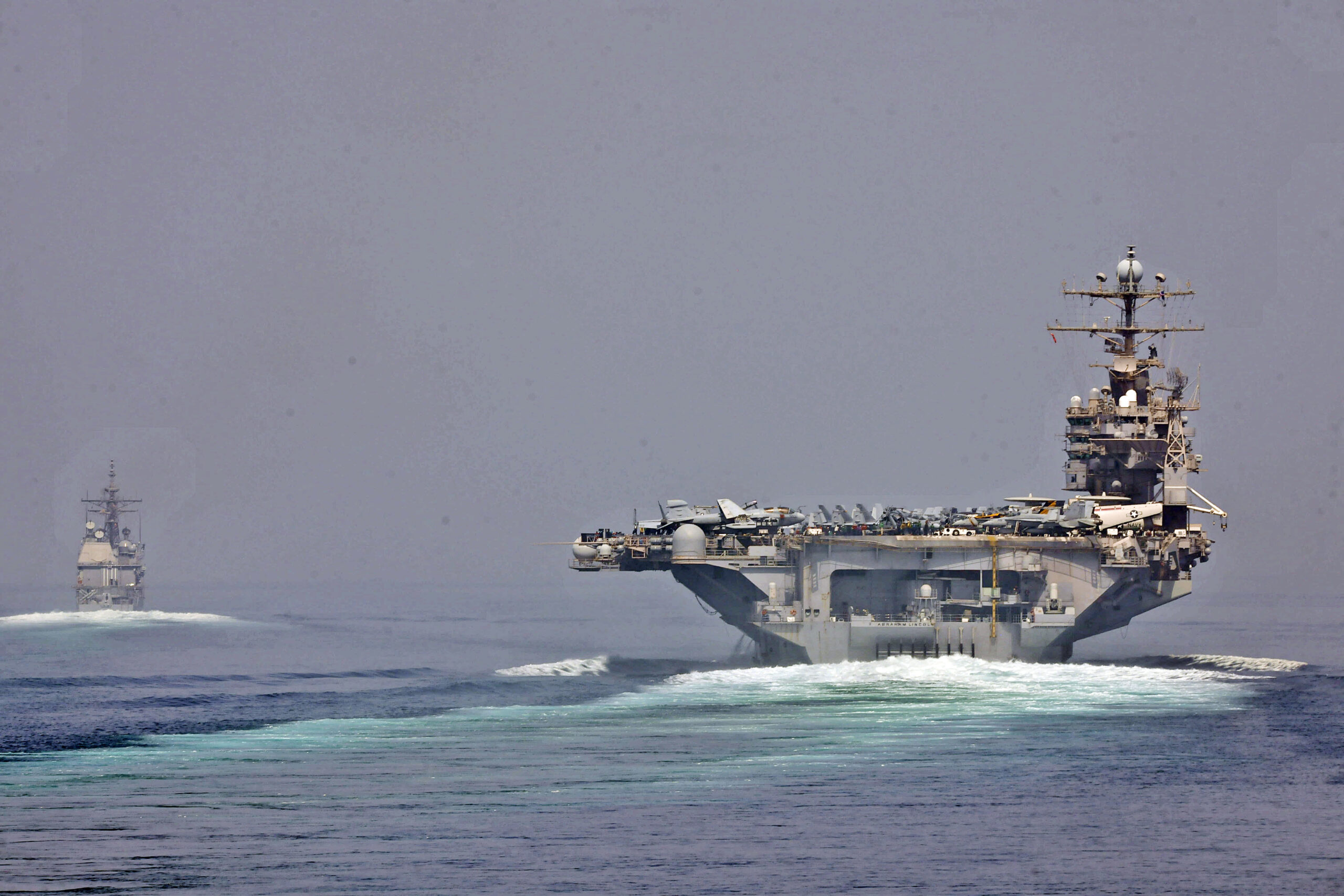
1. Strait of Hormuz. The Antigua and Barbuda-flagged, UAE-managed bulk carrier MV Cape Dao was attacked near Oman’s Musandam Peninsula on 23 September; at least one Indian seafarer was killed. No group had independently confirmed responsibility by publication time, and this briefing treats descriptions of the weapon used as unconfirmed. The strait remained effectively closed to normal commercial shipping, with monitoring data showing only a fraction of the roughly 85 daily pre-war transits still occurring. — Gulf News; Business Standard; Lloyd’s List; gCaptain, 23–24 September.
2. Israel. Prime Minister Benjamin Netanyahu told the UN General Assembly on 24 September that Qatar was “spreading lies” and “backing Hamas,” and accused it of funding US universities and Al Jazeera to “brainwash young minds” against Israel; he called Turkish President Recep Tayyip Erdoğan a “tyrant” over Turkey’s record on Kurds and Cyprus, and rejected accusations that Israel had committed genocide in Gaza as “the greatest lie of the century,” citing Israeli-facilitated vaccinations and food deliveries. He referred to President Trump only once and did not mention Saudi Arabia or the Abraham Accords. — The Times of Israel; The Jerusalem Post; CNN, 24 September.
Elsewhere in the Middle East — no new, independently confirmed development on Gaza’s ceasefire implementation, Lebanon, or Syria cleared this briefing’s verification standard in the 23–26 September window.
III · The Great Powers
The balance of power today
Donald Trump opened UN General Assembly week by threatening to “annihilate” Iran; when Tehran surfaced a concrete plan to reopen the Strait of Hormuz days later, he reportedly turned it down.
1. United States / Iran. President Trump told the UN General Assembly on 22 September: “I have a big decision to make: will a deal be made with Iran that lets them rebuild…or do I annihilate the Islamic Republic, and do it quickly?” He predicted a deal would come after the US midterm elections but said the midterms themselves played no role in his Iran decision. President Masoud Pezeshkian replied the next day that Iran was “the victim of terrorists,” not a terrorist state, and said Iran would not accept the US naval blockade being used to restrict its access to the strait, while extending Iran’s “hands towards the world” on diplomacy. — Axios; NBC News; CBS News; Al Jazeera; The Washington Post, 22–23 September.
2. United States / Iran negotiations. Iran’s Foreign Minister Abbas Araghchi said mediators submitted a phased plan to the White House on the UN General Assembly’s sidelines: Washington would implement agreed measures over four to five days, the strait would reopen on day six, and negotiations would resume on day seven, with Iran offering to cap enrichment levels and accept outside verification in exchange for an end to the naval blockade and eased sanctions. Bloomberg and CBS News reported that Trump rejected the proposal and indicated he expected to resume military pressure after the midterms; oil prices fell more than 2% on 25 September on early word of the talks, before the rejection was reported. — Bloomberg; CBS News, 25 September.
Elsewhere among the Great Powers — no new, independently confirmed development on China’s or Russia’s posture toward Sudan or Iran, or on the Saudi-Turkey-Pakistan defence pact’s next steps, cleared this briefing’s verification standard in the 23–26 September window.
Abdinasir Hassan Timoweyne is Chairperson of the Nexa Research and Training Centre and a political analyst specialising in the Horn of Africa and the Middle East. He lectures in International Relations at New Generation University.