
Daily Briefing: Iran’s Hormuz Offer, Ethiopia’s New Coalition, and Saudi Arabia’s Arms Search
Nexa Insight · Regional Analysis · Daily Briefing
Verified developments, 20–23 September 2026 | What happened, not what it means — the analysis is in the Weekly Update.
I · Horn of Africa
Horn of Africa today
The UN voiced rare, explicit alarm over Ethiopia after seven armed opposition groups announced a formal coalition against Addis Ababa.
1. Ethiopia. Seven Ethiopian opposition and armed groups formally announced a coalition on 20 September, in a statement read live on Tigrai TV by Zemene Kassie, chairman of the Amhara Fano National Movement. UN Secretary-General spokesperson Stéphane Dujarric said the following day that the UN was “deeply concerned” by the worsening security situation, citing the new coalition, continued insecurity and reports of drone strikes, and urged all sides to return to dialogue, saying “military action will not resolve political differences or address underlying grievances.” The coalition — which the seven groups are calling the Ethiopian Peoples’ Forces Alliance for Survival, including the Tigray People’s Liberation Front and the Oromo Liberation Army alongside Fano — was independently reported by Al Jazeera and Reuters, not just the Tigrai TV broadcast where it was announced. Whether it holds together in practice, given some of these groups fought each other as recently as the 2020–2022 Tigray war, has not yet been tested. — Al Jazeera; Reuters, 21 September; UN daily press briefing, 21 September.
Elsewhere in the Horn — Sudan’s diplomatic track continued quietly, with Egypt’s foreign minister, Sudan’s foreign minister and US presidential adviser Massad Boulos holding trilateral talks in New York on a durable peace deal; no new development on Somalia, Somaliland or Djibouti cleared this briefing’s verification standard in the 20–23 September window.
II · Middle East
Middle East today
Iran put a concrete number on ending the Hormuz crisis, while Saudi Arabia’s own missile stocks are running thin enough to bring in outside help.
1. Iran / Strait of Hormuz. A senior Iranian official told Reuters on 22 September that Iran can reopen the Strait of Hormuz within seven days if the United States eases military pressure and lifts its blockade of Iranian ports. The official said the proposal was delivered to Washington through mediators six days earlier, on 16 September, and that further details could be discussed in New York this week through the same channels. The strait remains effectively closed to normal commercial traffic amid the US-Israel-Iran war that began in February. — Reuters, via CNBC and U.S. News, 22 September.
2. Saudi Arabia / air defense. Saudi Arabia has asked France, the United Kingdom, Pakistan and Egypt to deploy air-defense support, as its stock of missile interceptors runs low after months of Houthi missile and drone attacks. Officials said the outreach was necessary in part because the United States, Riyadh’s main supplier, has itself drawn down interceptor stocks during its six-month war with Iran. The attacks are being described as the first real test of the defense pact Saudi Arabia signed with Turkey and Pakistan in August. — wire reporting via regional outlets, mid-to-late September.
Elsewhere in the Middle East — no new confirmed development on Gaza, Lebanon or Syria cleared this briefing’s verification standard in the 20–23 September window.
III · The Great Powers
The balance of power today
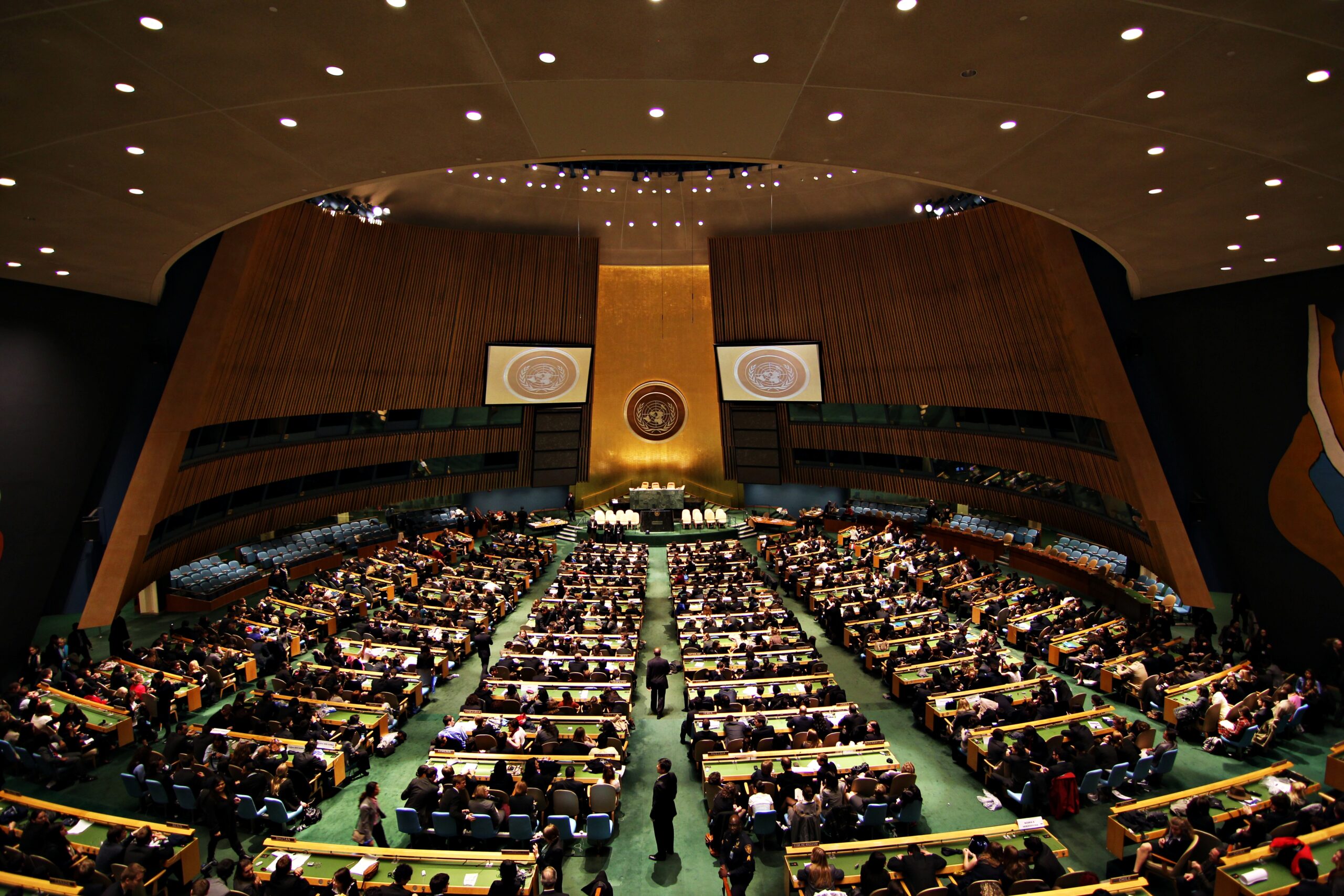
Iran’s president brought a potential opening to the United Nations this week — but not to Donald Trump directly.
1. Iran / United States. Iranian President Masoud Pezeshkian traveled to New York for the UN General Assembly, where Tehran plans to use intermediary nations to advance negotiations with Washington rather than direct talks. Officials confirmed Pezeshkian will not meet President Trump at UN headquarters, even as Iran’s mediated proposal on Hormuz sits with US officials. — The National; Iran International, 22 September.
Elsewhere among the Great Powers — no new confirmed development on China, Russia or the Saudi-Turkey-Pakistan pact’s next steps cleared this briefing’s verification standard in the 20–23 September window.
IV · Consequences & Outlook for the Horn
What today’s developments could mean
1. If the new 20 September rebel coalition holds together despite its members’ own recent history of fighting each other, an Ethiopia has less capacity for external adventurism — on present trends, this lowers, not raises, the near-term odds of Prime Minister Abiy Ahmed moving on Eritrea’s port of Assab.
2. Ethiopia’s instability is a direct economic exposure for Djibouti, whose port revenue depends heavily on Ethiopian transit trade — the risk here is economic before it is military.
3. If Iran’s Hormuz offer holds, shipping currently rerouted around Africa could gradually shift back through Hormuz — quietly reducing the strategic premium now attached to Red Sea and Horn of Africa ports.
4. Saudi Arabia’s outreach to Egypt for air-defense help can reinforce Cairo-Riyadh security ties — a relationship that has previously translated into firmer Egyptian backing against Ethiopia in the Nile dam dispute.
5. Mitigation. Djibouti’s most direct protection against Ethiopian instability is what it has already been doing — diversifying port revenue toward Somaliland’s Berbera corridor and Gulf-state investment, rather than relying on Addis Ababa’s stability alone.
Outlook: the Horn’s sharpest near-term exposure this week is economic and diplomatic, not military — a case where a neighbor’s internal crisis (Ethiopia, since 20 September) reduces rather than raises the immediate risk of external conflict.
Abdinasir Hassan Timoweyne is Founder and Director of the Nexa Centre and Senior Lecturer in International Relations at New Generation University. He is the author of several published articles on Horn of Africa and Middle East politics.