Comprehensive Course

This Comprehensive Course is a full-length, in-depth learning program designed for students who seek thorough mastery of a subject through a balanced and structured approach. Spanning multiple weeks, it combines detailed instruction, interactive activities, varied assessments, and ongoing support to ensure deep understanding and practical application. Ideal for academic, professional, or personal development, this course type provides the complete educational experience—equipping learners with foundational knowledge, critical skills, and the confidence to apply what they’ve learned in real-world contexts.


WhatsApp Image 2026 07 25 at 18.35.00

Terrorism & Counterterrorism

Terrorism and Counterterrorism offers a critical, comparative study of terrorism as a form of political violence and of the policies states use to prevent, disrupt, and respond to it. Students examine competing definitions, the historical evolution of terrorist movements, ideological narratives, radicalization pathways, recruitment, organizational strategy, and the growing role of media and technology in

Terrorism & Counterterrorism Read More »

WhatsApp Image 2026 07 26 at 13.44.08

Industrial Internship

Industrial Internship prepares students to convert real workplace experience into verified academic and professional learning. Over four structured weeks, learners secure placement approval, agree measurable learning objectives, and document responsibilities while practicing ethical conduct, confidentiality, and workplace professionalism. The course strengthens communication, teamwork, problem-solving, time management, and the ability to respond constructively to supervisor feedback

Industrial Internship Read More »

WhatsApp Image 2026 07 12 at 21.09.09

African Political Systems & Conflicts

African Political Systems and Conflicts examines how colonial inheritance, state formation, identity, religion, authoritarian rule, democratization, elections, borders, and regional institutions shape politics across the continent. Using comparative African cases alongside focused examples from Somali territories and the wider Horn of Africa, students investigate why political systems develop differently and why some disputes escalate into

African Political Systems & Conflicts Read More »

Politics, Security, and Conflict in the Horn of Africa

Politics, Security, and Conflict in the Horn of Africa

Politics, Security, and Conflict in the Horn of Africa examines one of the world’s most strategically significant and politically complex regions. The course explores historical state formation, identity politics, governance, political economy, resource competition, interstate relations, civil war, peacebuilding, external intervention, and regional integration across a region of enduring global interest. Students analyze cases from

Politics, Security, and Conflict in the Horn of Africa Read More »

Diplomatic Protocol

Diplomatic Protocol

Diplomatic Protocol develops the knowledge and practical judgment required for professional conduct in official and international settings. Students learn diplomatic representation, accreditation, precedence, etiquette, official visits, bilateral meetings, correspondence, privileges and immunities, and structured negotiation practice used across modern diplomatic institutions worldwide. The course carefully distinguishes binding legal obligations from ceremonial custom, while emphasizing accuracy,

Diplomatic Protocol Read More »

Theories in International Relations

Theories in International Relations

Theories in International Relations trains students to use theory as a practical tool for interpreting world politics rather than as abstract classroom knowledge. The course examines realism, liberalism, constructivism, Marxist and other critical approaches, foreign-policy analysis, and competing understandings of international security and cooperation. Students compare the core assumptions, analytical strengths, and practical limitations of

Theories in International Relations Read More »

International Political Economy

International Political Economy

International Political Economy explores how political authority and economic forces interact and shape one another across the global system. The course compares liberal, economic-nationalist, Marxist, structural, and institutional perspectives while examining trade, monetary policy, international finance, sovereign debt, development strategy, inequality, globalization, and global economic governance institutions. Students analyze the roles played by states, markets,

International Political Economy Read More »

Introduction to IR

Introduction to International Relations

Introduction to International Relations provides a foundation for understanding how states, international organizations, non-state actors, and societies interact within world politics. Students study realism, liberalism, constructivism, and critical approaches to international relations alongside sovereignty, power, national interest, diplomacy, foreign policy, security, international law, political economy, and global governance structures. Examples drawn from Africa and the

Introduction to International Relations Read More »

The Politics in the Middle East

The politic in the Middle East

Politics of the Middle East introduces the historical foundations, institutions, identities, political economies, and regional rivalries that shape contemporary Middle Eastern politics today. Students examine colonial legacies, state formation, nationalism, political Islam, authoritarian rule, civil society, oil and rentier-state dynamics, protest movements, armed conflict, and recurring patterns of external intervention across the wider region and

The politic in the Middle East Read More »

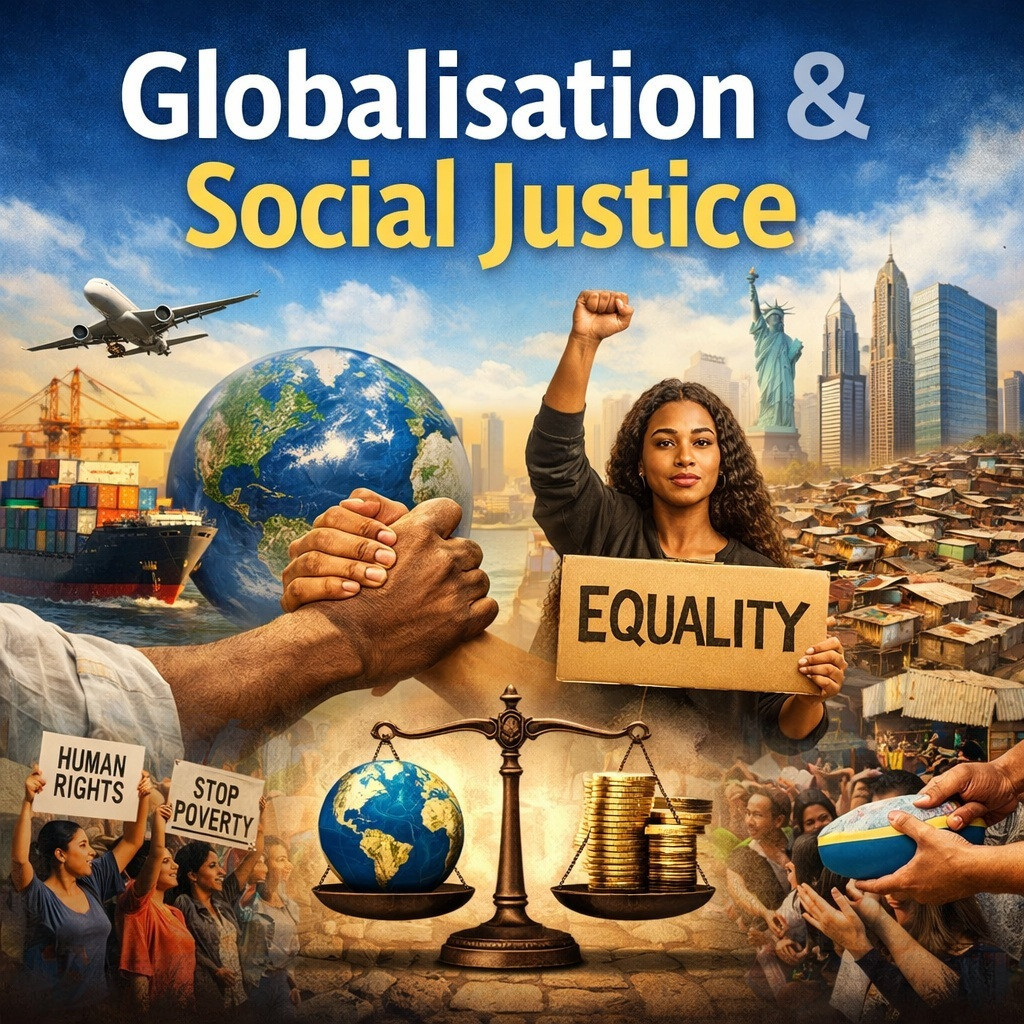
Globalization and Social Justice

Globalisation & Social Justice

Globalisation and Social Justice examines how economic integration, political institutions, migration, technology, culture, and environmental change interact to shape opportunity and inequality worldwide. Students compare liberal, critical, postcolonial, feminist, and human-rights perspectives while carefully evaluating the roles of governments, corporations, international organizations, and grassroots social movements in driving or resisting global change. The course connects

Globalisation & Social Justice Read More »

Scroll to Top